
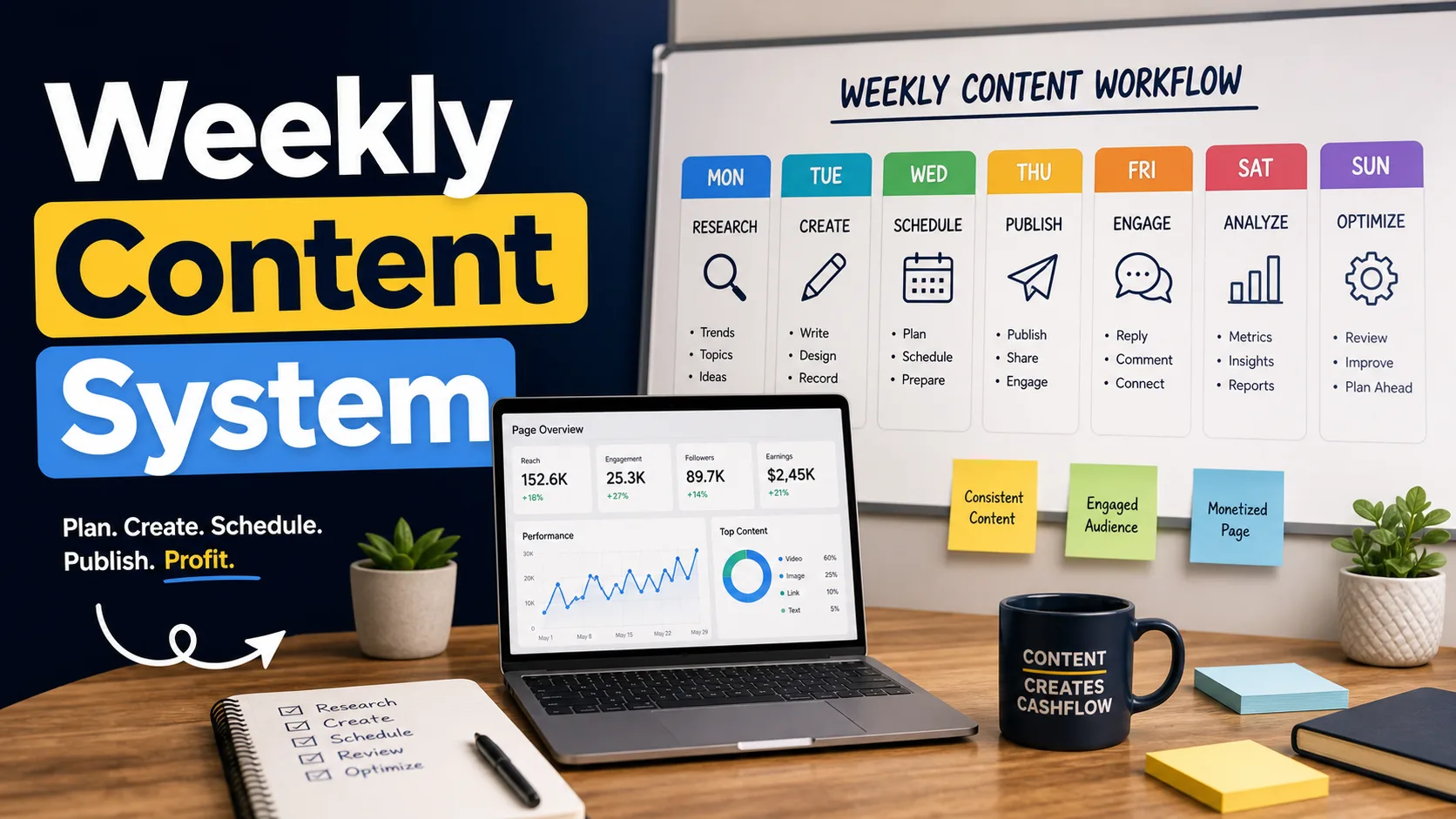
Monetized Facebook pages do not need chaos. They need a weekly rhythm. Without a rhythm, every post becomes an emergency and every content decision starts from zero.
A weekly system gives you enough structure to stay consistent while still leaving room for timely ideas, comments, and platform changes.
The 7-Day Monetized Page Rhythm
Each day has one job. That is what makes the system easier to maintain than a messy daily to-do list.
Research competitors and audience signals.
Create post angles and hooks.
Edit for originality and quality.
Schedule the core calendar.
Review comments and audience questions.
Test one new format or angle.
Study results and plan next week.
My Experience
Most page owners think consistency means posting every day no matter what. Real consistency means having a repeatable system that protects quality when life gets busy.
The Weekly Workflow
This workflow works for one page, but it becomes even more valuable when managing multiple pages.
- Choose your weekly theme and audience problem.
- Research 5 to 10 pages for proven patterns.
- Create 15 to 25 post angles.
- Edit down to the strongest posts.
- Schedule posts across morning, afternoon, and night slots if your page supports that volume.
- Leave flexible space for timely posts.
- Review results every Sunday and update the next week.
Weekly Content Slot Planner
| Slot | Best Use | Example |
|---|---|---|
| Morning | Helpful or saveable content | Checklist, tip, short lesson. |
| Afternoon | Discussion and community | Question, opinion, comparison. |
| Night | Story or entertainment | Mini story, relatable mistake, recap. |
| Flexible | Timely posts | Trend, news reaction, audience comment. |
Weekly Review Questions
- Which topic created the strongest audience response?
- Which format underperformed?
- Which post earned comments worth turning into content?
- What should be repeated with a new angle?
- What should be stopped next week?
- What needs more original examples or visuals?
Mini Case Study: A Realistic Creator Scenario
A health tips page can use Monday for research, Tuesday for “myth vs fact” posts, Wednesday for editing claims carefully, Thursday for scheduling, and Sunday for checking which tips earned saves without making risky medical promises.
How to Apply This in Different Niches
A good Facebook content system should not feel locked to one niche. The same process can work for food, parenting, travel, education, DIY, motivation, tech, or lifestyle pages, but the execution has to match what that audience actually values. This is where many creators lose quality: they copy a format from another niche without adapting the promise, examples, and emotional trigger.
| Niche | Smart Adaptation | What to Avoid |
|---|---|---|
| Food or recipes | Turn the idea into practical meal planning, ingredient swaps, budget tips, or quick mistakes people can fix today. | Copying another creator’s recipe photos, exact method, or personal story. |
| Parenting or family | Use relatable scenarios, simple checklists, and discussion questions that invite real experience from parents. | Making extreme claims or using shame-based hooks for comments. |
| Travel or lifestyle | Add location context, realistic budgets, local etiquette, or planning details that make the post useful. | Reposting generic destination clips with no original commentary. |
| Education or tips | Break the idea into steps, examples, definitions, and “do this / avoid this” guidance. | Publishing vague advice that sounds helpful but gives no next action. |
Quality Control Before You Schedule
Before a post goes into the calendar, give it a final creator review. I like this step because it catches the problems that tools cannot always understand: a hook that feels too dramatic, an example that sounds generic, a claim that needs checking, or an idea that no longer fits the page’s audience.
- Read the first line out loud and ask whether it creates a clear promise.
- Check that the post adds something original: an example, opinion, framework, visual, or useful structure.
- Remove lazy engagement bait and replace it with a real question or practical takeaway.
- Make sure any policy, earnings, health, finance, or factual claim is careful and not exaggerated.
- Confirm the format fits the idea. Some ideas need a short text post; others need a visual, reel, or checklist.
- Add a review note so you know what to measure after the post goes live.
A Simple Weekly Review Scorecard
The review step is where automation becomes useful instead of noisy. Do not only ask, “Did this post get views?” Ask what the post taught you. A post with fewer views but strong comments can reveal a better audience direction than a random viral spike.
| Score Area | Question to Ask | Next Action |
|---|---|---|
| Hook | Did the opening line create enough interest? | Rewrite weak hooks and test a more specific version next week. |
| Originality | Did the post feel clearly different from the inspiration source? | Add stronger examples, visuals, or commentary. |
| Audience fit | Did the right people react? | Double down on topics that attract your intended audience. |
| Business value | Did the post support reach, trust, monetization, or content research? | Keep the posts that support a clear page goal. |
What I Would Do Today
If I were running this page today, I would keep the workflow simple for the next seven days. I would choose one audience problem, create several original angles around it, schedule the strongest posts, and review the results before expanding the calendar. The mistake is trying to fix everything at once. A creator improves faster by testing one clear variable at a time: the hook, the format, the topic, the visual, or the posting slot. That is how a page builds a system instead of collecting random tactics.
How Contai Fits Into This Workflow
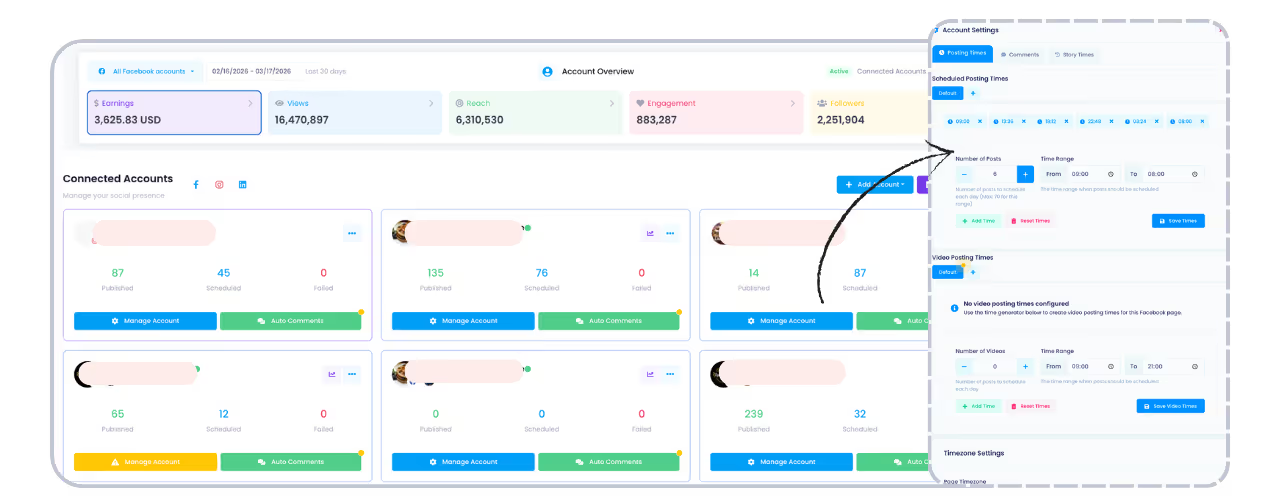
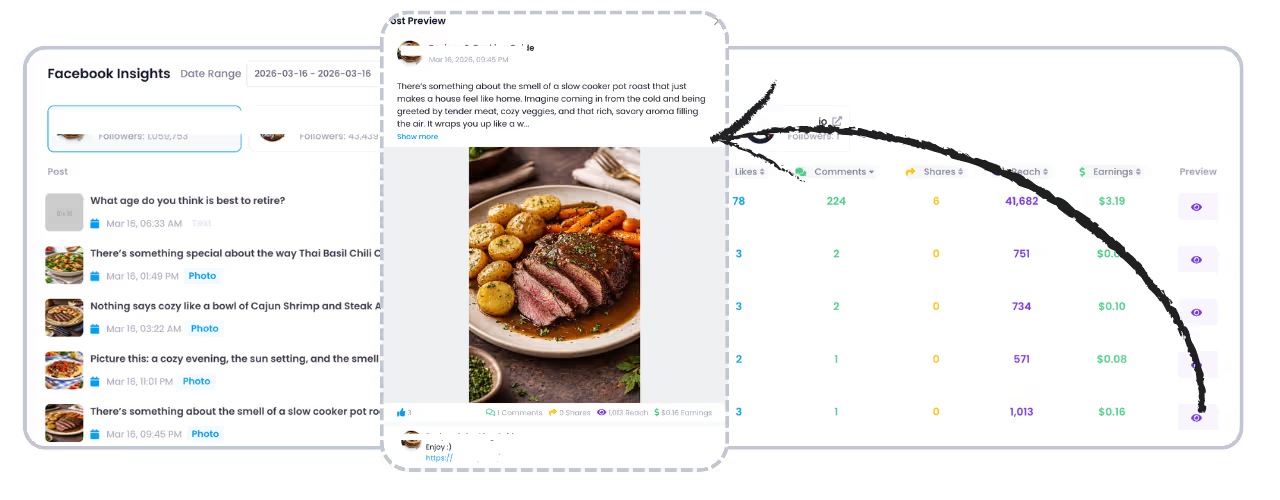
Contai fits this workflow through its research, generation, and advanced publishing and scheduling features. It helps creators avoid the scattered process of researching in one tool, writing in another, and scheduling somewhere else.
Mistakes to Avoid
- Planning content only on the day of publishing.
- Using the same format all week.
- Ignoring comments as content research.
- Scheduling without a quality review.
- Never comparing planned posts with actual results.
Related Reading
- 30 days of Facebook posts
- Research, writing, publishing workflow
- Facebook automation guide
- Facebook monetization strategy
- Facebook post hooks
FAQ
How many posts should a monetized page schedule weekly?
It depends on niche, format, quality, and audience response. Start with a sustainable volume and improve from weekly review.
Should I post morning, afternoon, and night?
That can work for some pages, but only if quality stays high. Test slots and review results.
Can I schedule everything in advance?
Schedule core evergreen content, but leave space for timely posts and audience-driven ideas.
What is the most important weekly task?
Sunday review is often the most valuable because it turns last week’s results into next week’s decisions.
Final Takeaway
A weekly content system gives your page memory. It helps you stop guessing, publish with less stress, and improve from real signals every week.
Keep learning
Get Smarter Facebook Content Automation Tips
Weekly guides about Facebook automation, AI content workflows, content monetization, and page growth systems.
Join the Newsletter