

Facebook automation is one of the most misunderstood topics in social media. For serious creators and page owners, it should not mean bots, fake engagement, scraping, or spam. It should mean a smarter operating system for researching content ideas, creating better posts, publishing consistently, and improving from real audience data.
Because Facebook rules and creator tools can change, creators should always compare workflow advice with official resources like the Meta for Creators hub and Facebook’s Policies Center.
This guide explains how to use Facebook automation in a policy-safe, creator-focused way: as a workflow for content research, AI-assisted creation, scheduling, analytics, and monetization planning.
What Facebook Automation Really Means
Facebook automation is the process of using systems and tools to reduce repetitive work in a Facebook content workflow. A creator might automate content idea collection, AI-assisted drafts, publishing reminders, reporting dashboards, or weekly content reviews.
Good automation does not try to trick the algorithm. It helps creators stay consistent, understand what their audience wants, and create original content more efficiently.
Good Facebook automation includes
- Saving content ideas from competitor research and audience questions.
- Using an AI social media post generator to draft hooks, captions, and post variations.
- Organizing a weekly content calendar with production status and review notes.
- Scheduling approved posts after human review.
- Tracking reach, retention, shares, comments, and content quality signals.
- Building a repeatable workflow for monetized Facebook pages.
Bad Facebook automation includes
Why Creators Need a Facebook Automation Workflow
Most Facebook page owners do not fail because they lack ideas. They fail because their workflow is inconsistent. They post randomly, forget what worked, do not review data, and create content only when they feel inspired.
A strong automation workflow turns content creation into a weekly system. That matters for creators who want page growth, audience trust, and stronger monetization potential.
The 6-Step Facebook Automation System
1. Research viral posts and competitor pages
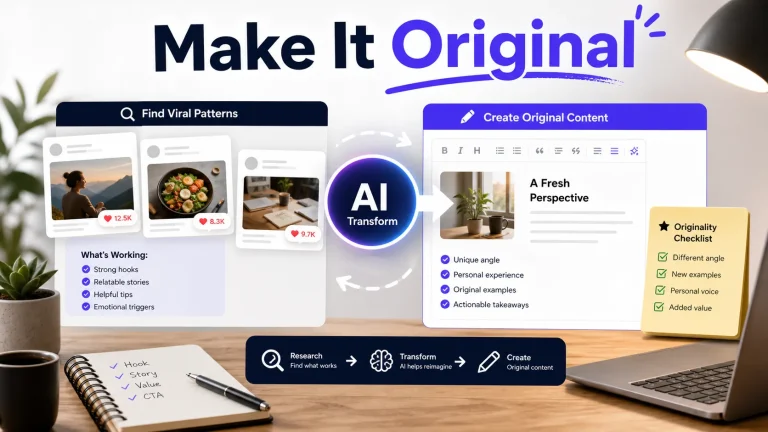
Start by collecting examples from successful pages in your niche. Look for post formats, topic angles, visual styles, video structures, and comment patterns. The goal is not to copy. The goal is to understand what audiences already respond to.
2. Turn patterns into original content ideas
Group the examples into patterns: tutorials, opinion posts, list posts, before-and-after posts, story posts, reaction posts, and explainers. Then create original ideas that fit your page’s audience and voice.
3. Use AI to create drafts and variations
AI can help generate post hooks, captions, outlines, carousel ideas, video scripts, and long-form Facebook posts. The best results come when you give AI a clear brief and then edit the output yourself.
4. Build a content calendar
Your calendar should include topic, format, hook, asset status, review status, publish date, and performance notes. This gives you a clear view of the content pipeline.
5. Schedule approved posts
Scheduling is useful only after the post has been reviewed. Check originality, source notes, caption quality, visual quality, and whether the post matches your page identity.
6. Review results every week
Track which topics and formats repeatedly perform. Review reach, retention, comments, shares, negative feedback, and monetization signals. Then use those insights to plan the next week.
Recommended Tools for Facebook Automation
A useful Facebook automation stack usually includes research tools, AI content tools, scheduling tools, analytics tools, and design tools. For creators who want one connected workflow, Facebook content monetization tools like Contai can help combine viral research, AI content generation, visual creation, and publishing support.
Where Contai fits
Contai can support the workflow from viral content research to AI-assisted post creation and publishing. It is especially useful for creators who need consistency, but still want to keep human review and originality in the process.
How Facebook Automation Supports Monetization
Monetization is not only about posting more. It is about creating content that earns trust, keeps people watching, and fits a clear niche. A structured workflow helps creators plan stronger hooks, recurring formats, better visuals, and data-backed improvements. For a deeper breakdown, read our guide to Facebook content monetization tools and workflows.
Final Takeaway
Facebook automation should make creators more organized, more consistent, and more strategic. The safest and most useful automation does not chase fake engagement. It helps creators research better ideas, create stronger content, publish with discipline, and improve from real audience signals.
Frequently Asked Questions
What does Facebook automation mean?
Facebook automation means using tools and systems to support content research, AI-assisted drafting, scheduling, analytics, and workflow organization. It should not mean bots, spam, fake engagement, or scraping.
Is Facebook automation safe for creators?
It is safest when automation supports planning, publishing, and reporting while keeping human review, originality, and platform rules at the center of the workflow.
What should Facebook creators automate first?
Creators should start with idea collection, content calendars, AI-assisted drafts, scheduling reminders, and weekly performance reports.
Keep learning
Related articles

Get Smarter Facebook Content Automation Tips
Weekly guides about Facebook automation, AI content workflows, content monetization, and page growth systems.
Join the Newsletter