
Most Facebook page owners do not have a content problem. They have a workflow problem.
They research randomly, create one post at a time, publish when they feel behind, reply to comments only when they remember, and then wonder why the page feels stressful even when it gets views.
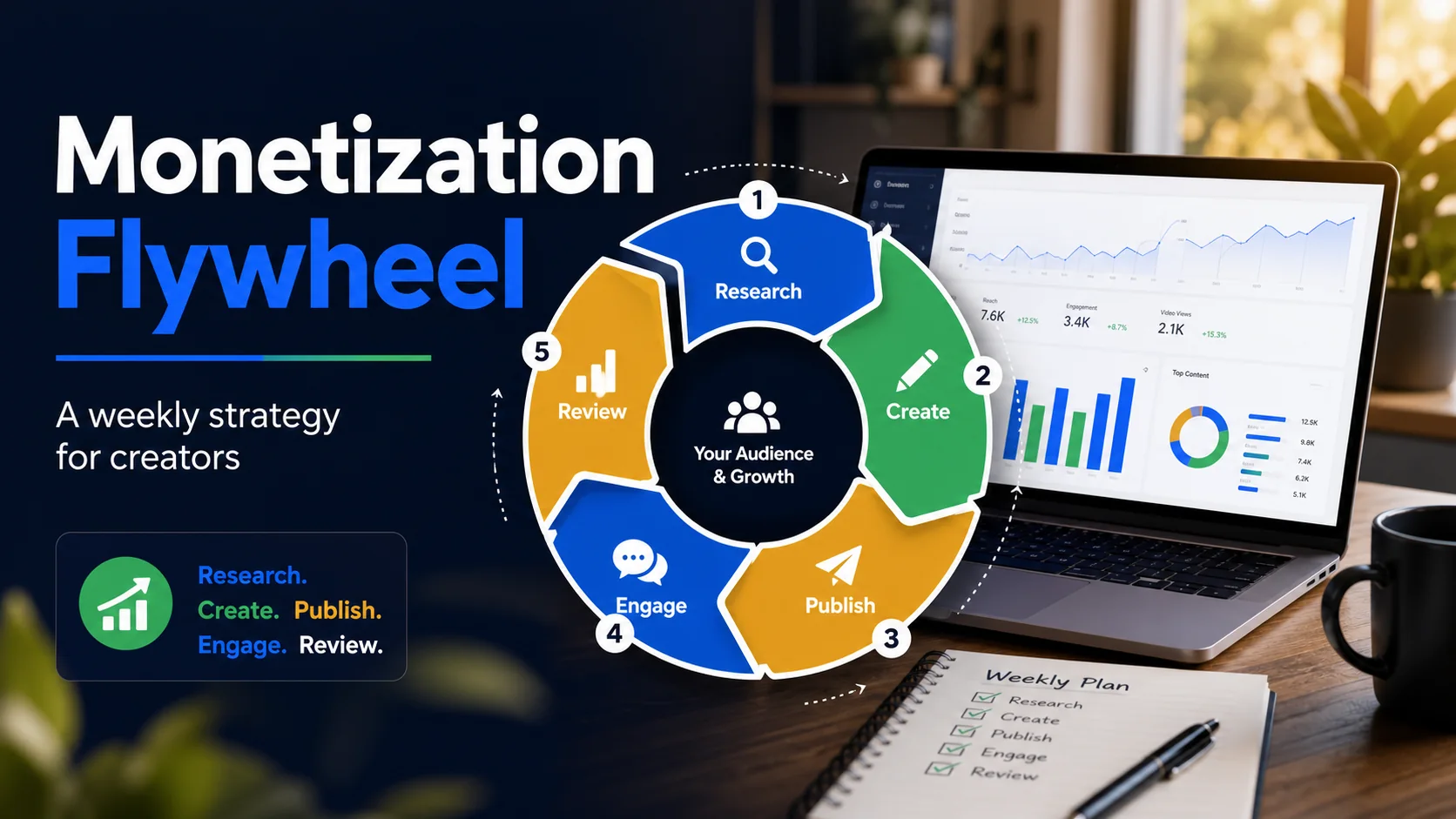
A serious Facebook content monetization strategy works differently. It treats every week as a repeatable operating cycle: research what is working, create original content from those patterns, publish with a balanced schedule, engage while posts are active, review performance, then repeat the next week with better decisions.
A practical Facebook monetization workflow moves through five stages every week: research winning content, create original versions, publish with a consistent format mix, engage with the audience, and review performance before planning the next cycle.
Facebook automation should support research, content planning, AI-assisted creation, scheduling, and analytics. It should not be used for fake engagement, copied posts, spam publishing, or anything that risks monetization eligibility.
Why Posting More Is Not the Same as Building a Facebook Content Monetization Strategy
Posting more can help only when the content is useful, original, and connected to a clear audience. If every post starts from zero, more posting usually means more stress, more inconsistency, and more average content.
A structured content system is different. It gives each part of the week a job. Research gives you direction. Creation turns that direction into original posts. Publishing gives the page rhythm. Engagement tells you what the audience cares about. Evaluation decides what to repeat, improve, or stop.
This is why many monetized pages do not win because they have one viral post. They win because they build a weekly loop that keeps producing better ideas.
Step 1: Research What Is Already Working
Start the week with research. Do not open Facebook and hope inspiration appears. Choose five to ten relevant pages in your niche and study their strongest posts from the last seven to thirty days.
- Separate posts by format: Reel, photo, text, long video, Story, or link.
- Record the hook, topic, emotion, format, and engagement pattern.
- Look for repeated patterns across multiple pages.
- Notice which posts earn comments, shares, watch time, or return visits.
- Study the shape of successful content, not the exact wording or visual.
For example, if three food pages all get strong engagement from short “3-ingredient dinner” Reels, the pattern is not the exact recipe. The pattern is simple ingredients, low effort, fast payoff, and a result people can imagine making tonight.
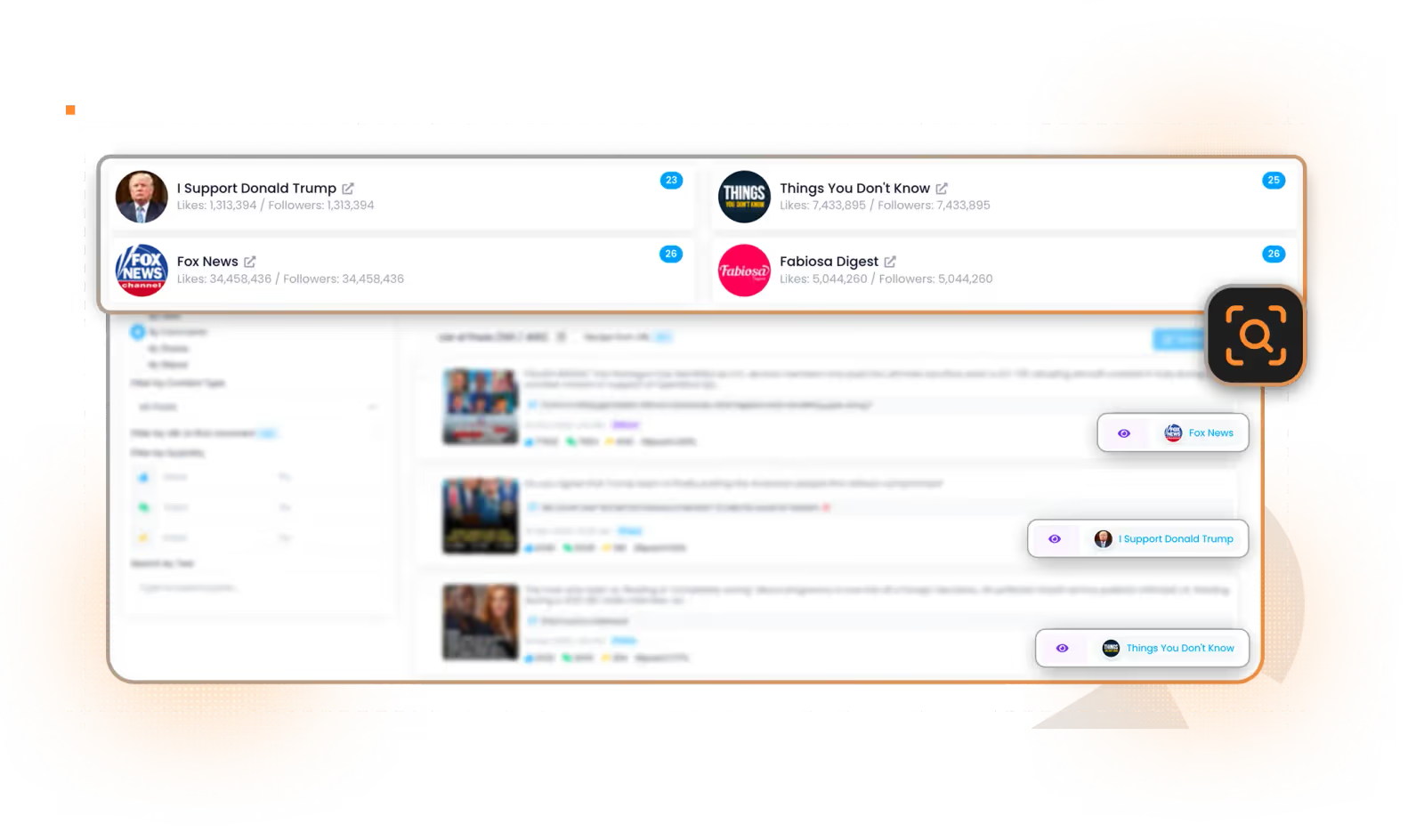
This is also where a Facebook page analyzer can save hours. Instead of manually scrolling through every competitor page, creators can compare pages, filter posts by engagement signals, and find format patterns faster.
Step 2: Turn Proven Patterns Into Original Content
Research is not permission to copy. If you copy competitors directly, you weaken your brand and may create originality problems. The goal is to understand why a post worked, then create something new for your audience.
Use these transformation moves:
- Change the angle.
- Add personal experience or field knowledge.
- Adapt the topic to a narrower audience.
- Use a different content format.
- Improve the hook.
- Add more practical detail.
- Create a new visual.
- Combine ideas from several sources.
A viral idea might be “5 mistakes that kill your Facebook reach.” A more original version for a monetized creator page could be: “5 weekly workflow mistakes that make your Facebook page harder to monetize.” Same pain point, new angle, more specific audience, and a safer original direction.
An AI social media post generator can help you create hooks, captions, and variations, but the creator still has to edit. AI should speed up the draft, not replace your judgment.
Step 3: Build a Balanced Publishing System
A monetized page needs a content mix. If you publish only one format, you usually create one kind of signal. Reels may bring reach, but they do not always create deep discussion. Text posts can create comments, but they may not grow as quickly. Long videos can build stronger attention, but they take more production time.
A balanced Facebook content formats mix can look like this:
- Reels for discovery and reach.
- Images for fast consumption and sharing.
- Text posts for discussion.
- Longer videos for deeper attention.
- Stories for regular audience contact.
- Links for website traffic when appropriate.
Do not start with an impossible posting frequency. Start with a cadence you can maintain while keeping quality stable. If you can publish one strong post per day, begin there. If your workflow can support two or three posts per day without quality dropping, increase slowly.
Step 4: Use Engagement as Research
Comments and reactions are not just vanity metrics. They are audience research. When a post is active, study what people say, where they disagree, what they ask, and what they repeat.
- Questions people ask.
- Objections or confusion.
- Emotional reactions.
- Repeated phrases.
- Requests for more examples.
- Topics that create meaningful discussion.
One strong post can create several follow-up posts. If a text post about low reach gets twenty comments about inconsistent posting, your next pieces can cover weekly planning, format mix, content batching, and how to review analytics without overthinking.
Step 5: Review the Right Metrics Every Week
The weekly review is where the flywheel becomes useful. The goal is not to celebrate one viral result. The goal is to find repeatable patterns.
- Reach and views.
- Watch time or completion rate when available.
- Shares and comments.
- Clicks and link performance.
- Engagement rate relative to audience size.
- Follower growth.
- Earnings when available.
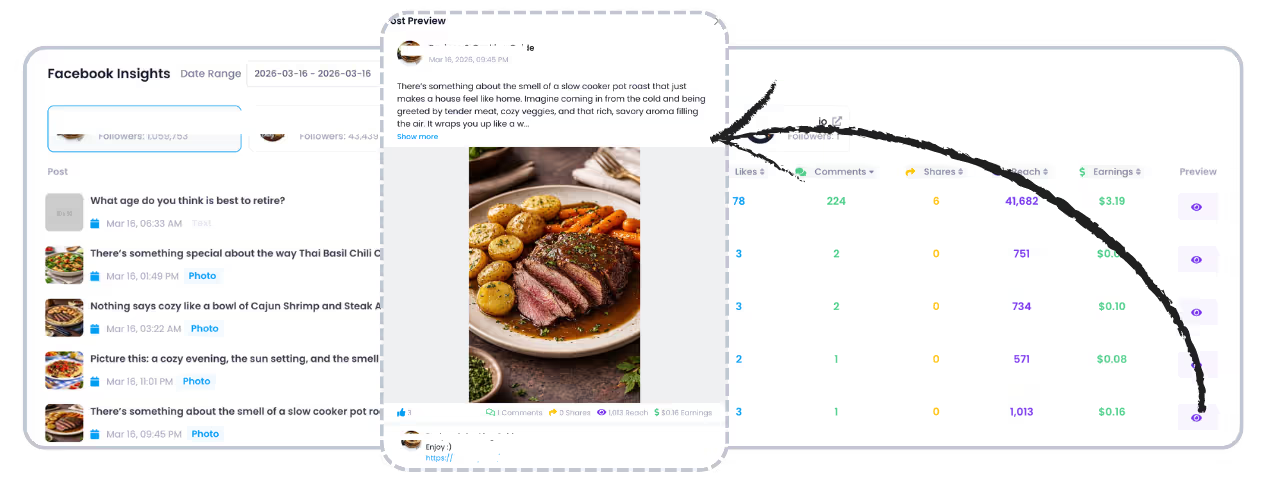
- Performance by post format.
A small page with a high engagement rate can teach you more than a huge page with weak audience response. This is why format-level review matters. You want to know whether Reels, photos, text posts, or long videos are doing the best job for your specific audience.
A Complete Weekly Facebook Monetization Workflow
Here is a simple weekly workflow you can repeat without starting from zero every day.
Monday: Research competitors and winning posts. Tuesday: Create ten to fifteen original content ideas. Wednesday: Prepare captions, visuals, and format variations. Thursday: Schedule the next content batch. Friday: Review current performance and audience feedback. Weekend: Respond to comments, save new ideas, and document lessons.
This workflow is simple on purpose. Most creators do not need a complicated dashboard at the beginning. They need a repeatable rhythm that turns research into posts and posts into learning.
How to Run This Workflow Faster With Contai
Manual research works, but it becomes slow when you manage several pages or publish daily. This is where Contai fits naturally into a Facebook content monetization tools stack.
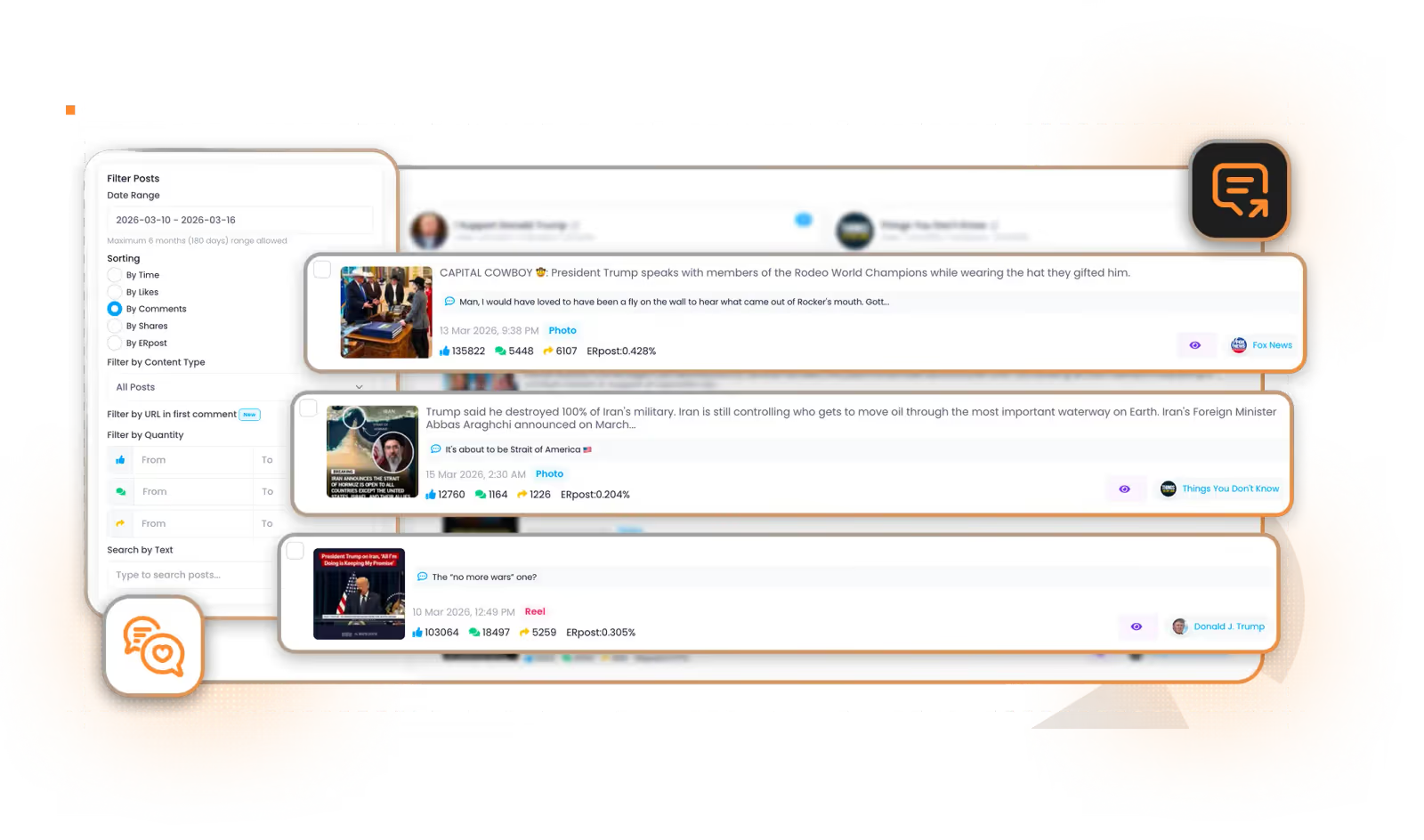
With Contai’s Facebook Page Analyzer, creators can search pages by keyword or name, import several page URLs, compare multiple Facebook pages, filter posts by likes, shares, comments, date, post format, keywords, and engagement rate, then select strong posts and send them into content generation.
Then Contai’s advanced publishing and scheduling workflow can help creators build templates, organize posts with dynamic tags, schedule content, manage multiple pages, and review performance signals.
Where Contai fits
Contai does not guarantee reach or revenue. Its value is helping creators move faster through the weekly cycle: research what works, generate original post ideas, prepare content, publish consistently, and review performance without juggling too many disconnected tools.
Mistakes That Break the Flywheel
- Copying competitors directly instead of creating original versions.
- Using AI output without editing it.
- Publishing only one content format.
- Increasing frequency before quality is stable.
- Ignoring comments after publishing.
- Tracking only likes instead of watch time, shares, comments, and repeat patterns.
- Never reviewing previous posts.
- Using automation for spam instead of repetitive workflow tasks.
Meta has also been more explicit about rewarding original creators and deprioritizing unoriginal content. That is a good reminder: a strong Facebook automation workflow should protect originality, not remove it.
Final Takeaway
A good Facebook content monetization strategy is not a pile of random tips. It is a weekly operating loop.
Research what works. Create original versions. Publish with a balanced format mix. Engage while the post is active. Review the right metrics. Then repeat with better decisions.
If you want to build a repeatable Facebook content workflow instead of starting every post from zero, tools like Contai can help connect research, creation, publishing, and evaluation in one place.
Tool note
Contai can help creators connect Facebook page analysis, viral content research, AI social media post generation, publishing, and performance review in one workflow.
Frequently Asked Questions
What is a Facebook content monetization strategy?
A Facebook content monetization strategy is a repeatable system for researching content, creating original posts, publishing consistently, engaging with the audience, and reviewing performance so the next content cycle improves.
How often should monetized Facebook pages post?
There is no universal posting frequency. Start with a sustainable cadence that keeps quality stable, then increase only when you can maintain originality, engagement, and review habits.
Can Facebook content creation be automated safely?
Yes, if automation supports research, planning, drafting, scheduling, and analytics. It should not be used for fake engagement, spam, copied content, or bypassing platform rules.
How do creators find viral Facebook posts without copying?
Study competitor pages for patterns: hooks, formats, topics, emotions, shares, comments, and engagement rate. Then create a new angle for your own audience instead of copying wording or visuals.
Which Facebook metrics matter most for monetization?
Useful metrics include reach, views, watch time, completion rate, shares, comments, clicks, follower growth, earnings when available, and performance by content format.
Can Contai help manage this workflow?
Contai can help creators research Facebook pages, filter strong posts, generate original content ideas, organize publishing, and review performance signals. It does not guarantee reach or revenue.
Keep learning
Related articles
Get Smarter Facebook Content Automation Tips
Weekly guides about Facebook automation, AI content workflows, content monetization, and page growth systems.
Join the Newsletter