
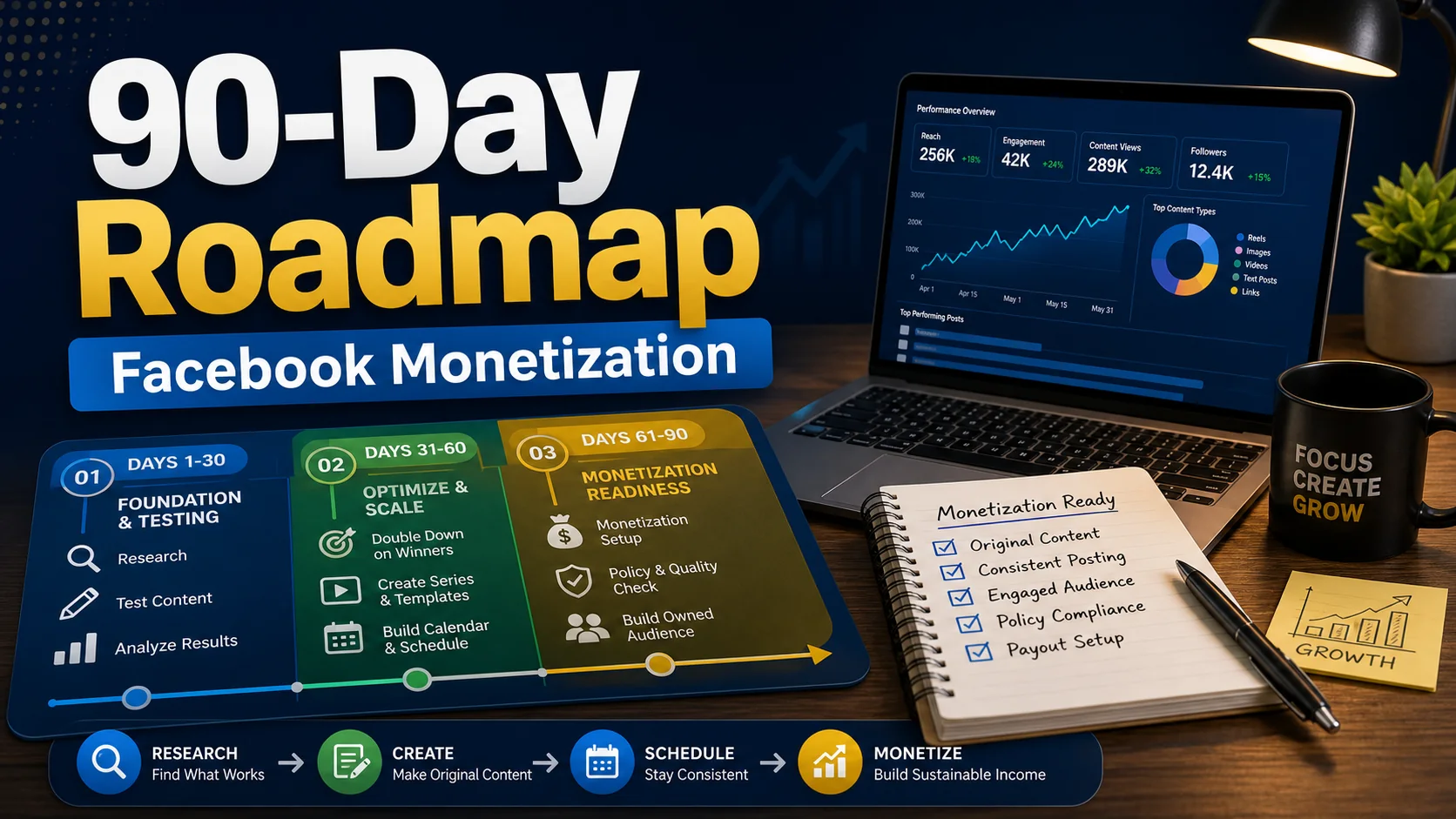
Most new Facebook pages fail because the owner expects results before building a repeatable content system. They publish for two weeks, watch a few posts flop, then start changing the niche, copying bigger pages, or posting random Reels hoping one of them saves the page.
A better approach is to treat the first 90 days as a testing period. Your job is not to force a guaranteed income number. Your job is to build a page that has clear positioning, original content, stable publishing habits, useful audience signals, and a realistic Facebook monetization roadmap.
This guide gives you a practical three-month plan for launching, testing, improving, and preparing a Facebook page for sustainable monetization. It is written for new page owners, creators, bloggers, and social media managers who want to build the right system before chasing big numbers.
Before Day 1: Choose the Right Niche and Positioning
Your niche decides how difficult your content life will be. Some creators choose a niche because it looks viral. Others choose one because they saw another page making money. Both can be dangerous if you cannot create original content consistently.
Before building the page, look at the niche from seven angles: audience size, content supply, advertiser interest, emotional or practical relevance, number of strong pages already operating, ability to create original content, and policy risk.
Finance and money can have strong business value, but the content must be careful and trustworthy. Health and wellness can attract loyal audiences, but claims need extra caution. Food and recipes can scale well because the audience understands visuals quickly. Parenting, pets, home, DIY, travel, sports, education, faith, and inspiration can all work if the page has a clear angle.
The mistake is choosing a broad category with no point of view. “Health tips” is not a position. “Simple health habits for busy parents” is clearer. “Recipes” is not enough. “Budget family dinners with simple ingredients” gives you a content direction.
Days 1-7: Build the Foundation
The first week should feel boring in the best way. You are not trying to hack growth. You are building the basic structure so the page looks real, secure, and ready for consistent publishing.
Create a professional Facebook Page or eligible professional presence. Choose a brandable name that can grow with the niche. Add a clear profile image, cover image, description, contact details, and a simple promise: what type of content people will get if they follow.
Configure Meta Business Suite, enable strong account security, set up two-factor authentication, review account standing, and check the monetization area so you understand where eligibility will be reviewed later. Do not wait until the page becomes valuable before taking security seriously.
Then define three to five content pillars. A budget recipe page might use: cheap dinners, kitchen shortcuts, leftovers, shopping lists, and family meal ideas. A travel page might use: destination tips, mistakes to avoid, hidden places, packing advice, and short travel stories.
Publish an initial set of original posts so the page does not look empty. Keep it simple: one intro post, one image post, one short video or Reel, one useful tip, and one question that invites real discussion.
Days 8-30: Test Content Formats and Topics
Month one is for learning. This is where many new page owners go wrong. They judge the entire niche from five posts, or they post thirty random pieces of content without tracking anything useful.
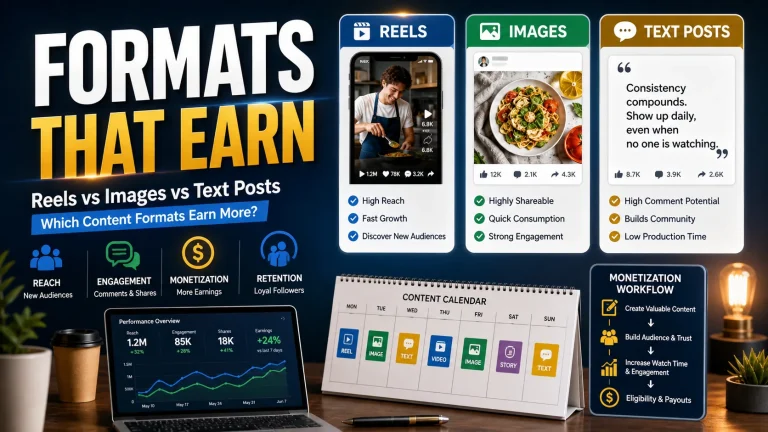
Test multiple formats: Reels, image posts, text posts, longer videos, Stories, and links when they make sense. You are not trying to decide the winner in one week. You are collecting enough signals to see what the audience actually responds to.
For every post, record the topic, format, hook, reach, shares, comments, engagement rate, views or watch behavior, website clicks, and earnings if your page is already eligible. Most new pages will not have earnings yet, so focus on signals that show future potential: shares, saves, comments, follows, repeat topics, and watch quality.
If you need help choosing formats, the guide on Facebook content monetization formats compares Reels, images, text posts, longer videos, Stories, and links by goal. Use that article with this roadmap so you are not testing blindly.
| Test Area | What to Try | What to Measure | What It Tells You |
|---|---|---|---|
| Reels | Fast hooks, visual tips, short stories | Views, retention, follows, shares | Whether the niche can reach new people quickly |
| Images | Checklists, quotes with context, before-and-after visuals | Shares, reactions, comments | Whether the audience responds to fast, visual ideas |
| Text Posts | Questions, opinions, short personal lessons | Comment quality and repeat discussion | What the audience cares enough to talk about |
| Links | Useful guides, blog posts, resources | Clicks, comments, time on page when available | Whether the page can support website monetization later |
Days 31-60: Double Down on Repeatable Winners
By the second month, you should stop treating every post as a separate experiment. Start looking for patterns. One strong post is not a strategy. Three or four posts with similar success can become a series.
Look for topics that win relative to your page size. A post with 200 shares on a small page may be a stronger signal than a post with 1,000 likes on a much larger page. Study shares, comment quality, retention, and follower growth, not only likes.
If short recipe Reels repeatedly work, build a weekly recipe series. If checklist images get shared, create a design template. If text posts about mistakes create long comment threads, turn that into a recurring discussion format. If link posts to website guides bring qualified clicks, create more supporting articles.
This is also when a Facebook content calendar becomes useful. Not a complicated calendar with twenty columns. Just a simple structure: format, topic, hook, publish date, goal, and review notes.
Days 61-90: Build a Monetization-Ready Operation
The third month is where the page should become more organized. You are still not guaranteed monetization, but you should be building the habits that make monetization more realistic: originality, consistency, quality control, clean account standing, audience response, and review discipline.
Review your monetization status regularly. Make sure you understand what Meta shows inside your page or professional dashboard. If business or payout information becomes relevant, organize it carefully. Do not rush through policy, tax, or payout steps when real money is involved.
At this stage, your Facebook monetization strategy should not depend on one traffic source only. Use a three-channel model:
- Facebook for reach, engagement, video discovery, and community signals.
- A website for search traffic, Google Discover, display ads, affiliate content, and deeper guides.
- Email for an audience you can reach without waiting for algorithm distribution.
This is how serious creators reduce platform risk. Facebook can be a powerful engine, but you do not control algorithm changes, monetization invitations, distribution updates, account restrictions, or policy changes.
Why Facebook Should Not Be Your Only Asset
A Facebook page is valuable, but it is still rented attention. You can build a great audience and still be affected by a policy update, reach shift, monetization change, or account issue. That does not mean Facebook is bad. It means you need a broader creator system.
A companion website lets you turn strong Facebook topics into search-focused content. An email list lets you bring loyal readers back. Pinterest can help evergreen content keep moving. WordPress can become your long-term library. This is especially useful for niches like recipes, DIY, education, parenting, health tips, travel, tools, and finance education.
The point is not to abandon Facebook. The point is to let Facebook feed a bigger content engine. A post that performs well on Facebook can become a blog article, Pinterest idea, newsletter topic, short video script, and future content series.
A Practical Weekly Workflow During the 90 Days
If you want to boost Facebook page earnings later, build the workflow before the page gets busy. A simple weekly rhythm is enough:
Monday: competitor and topic research. Save strong posts, but study patterns instead of copying.
Tuesday: content idea generation. Turn patterns into original angles for your own audience.
Wednesday: visual and caption production. Create images, Reels scripts, text posts, and link captions.
Thursday: scheduling. Prepare the next few days so you are not rushing every morning.
Friday: performance review. Compare formats, topics, hooks, shares, comments, clicks, and follower growth.
Weekend: audience engagement and idea collection. Reply to useful comments and save audience questions.
This is the safe version of Facebook automation: research, planning, original content creation, scheduling, repurposing, and review. It is not bots, fake engagement, or spam posting.
How Contai Supports the 90-Day Roadmap
The slowest part of building a new page is not clicking publish. It is figuring out what to publish, why it should work, how to make it original, and how to stay consistent when the first posts do not explode.
This is where Contai fits well. It connects research, content generation, visuals, scheduling, and publishing in one workflow instead of forcing creators to jump between spreadsheets, generic AI chat tools, design apps, and publishing dashboards.
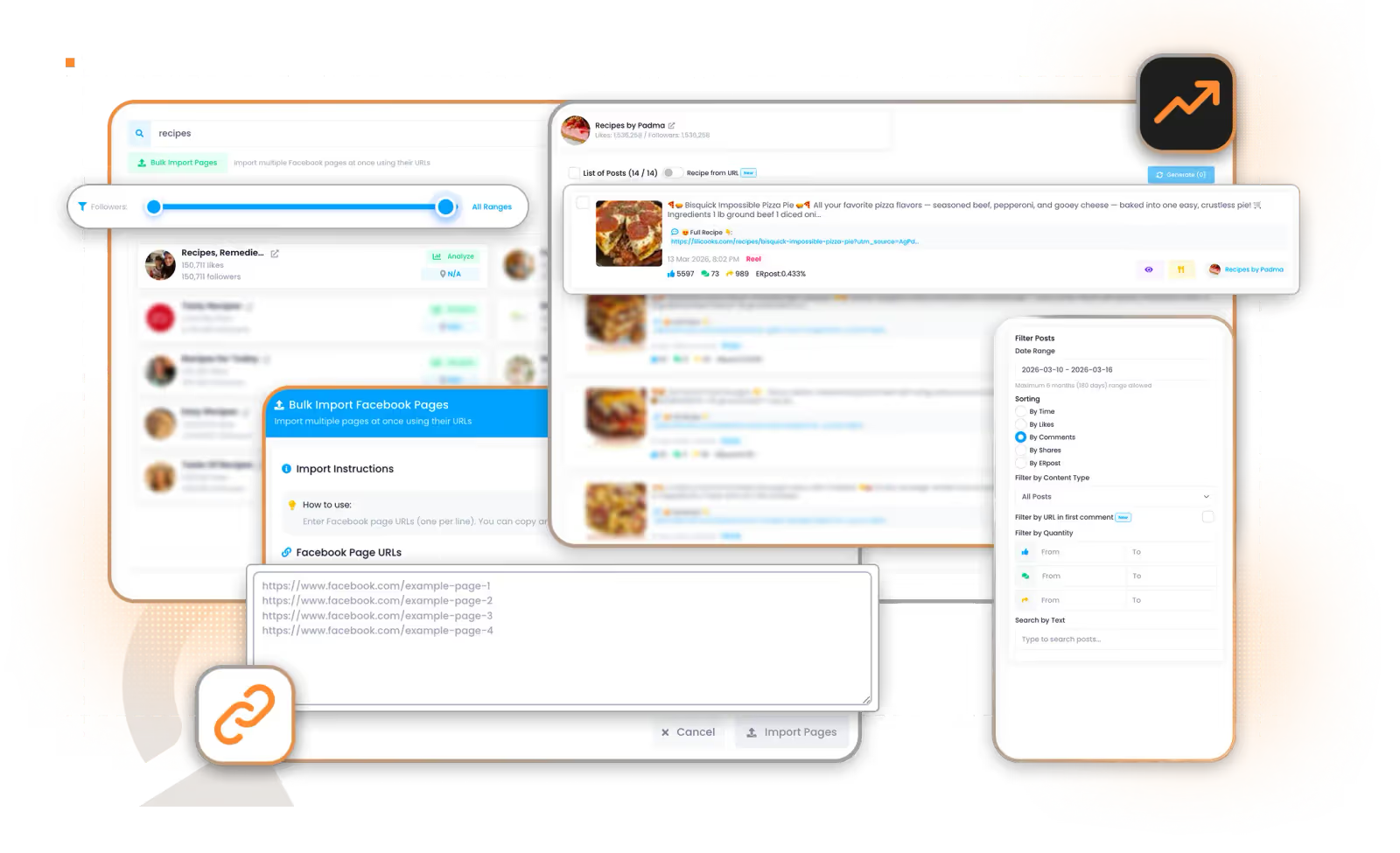
Research: Start With Real Page Data
With Contai’s Facebook Page Analyzer, creators can find relevant pages, compare competitors, filter top posts, identify strong formats, and generate new content ideas from real performance patterns.
The goal is not to copy viral posts. The goal is to understand why they worked: hook, topic, visual style, audience emotion, comment trigger, share reason, and format. Then you create something original for your own page.
Free Plan: Turn One Facebook Link Into Weeks of Content
Contai also has a free Facebook content plan workflow. The creator adds only their Facebook page link, and Contai analyzes the page’s best post patterns, visuals, formats, and key metrics. From that research, it can generate weeks of high-quality content posts built around what already fits the page.
This is powerful for new page owners because it removes the blank-page problem. Instead of asking, “What should I post this week?” you start with data from your own page and content patterns from the niche. Then you can review, edit, and publish the best ideas.
Creation, Scheduling, and Website Content
After research, Contai can help move selected ideas into AI-assisted generation so you can create fresh captions, post variations, visual directions, and publishing-ready content. Human review still matters. Edit the hook, remove anything generic, add niche-specific examples, and make sure the post is original.
For consistency, Contai’s advanced publishing and scheduling tool helps organize templates, posting times, publishing queues, and multi-platform content. For creators building a website alongside the page, the AI SEO article generator can turn strong Facebook topics into search-focused WordPress articles with outlines, metadata, internal links, and image support.
No tool can guarantee monetization. But a tool that connects research, original content, publishing, and review can help you stay consistent long enough to learn what your audience actually wants.
Account Security Before the Page Becomes Valuable
Security is boring until the page starts working. Then it becomes urgent. Set up two-factor authentication, use a secure recovery email, remove former collaborators, review admin roles regularly, and avoid sharing personal passwords with freelancers or team members.
If the page becomes part of a business, consider Meta Business verification when available and relevant. Keep access organized inside Business Suite, not scattered through personal messages and old accounts.
A backup administrator can be useful, but choose carefully. Give people only the permissions they actually need. Review roles every month during the 90-day period.
When to Change Direction
A short decline does not mean your niche is dead. New pages are noisy. One week can look promising and the next can feel flat. Before pivoting, compare at least 30 days of data.
Keep posting frequency reasonably stable while you review the problem. Is the issue the niche, topic, format, hook, visual style, posting time, or content quality? If competitors in the same niche are still performing, the niche may not be the problem. Your angle may need work.
Test adjacent angles before changing the entire page. A parenting page can move from general advice to school routines. A recipe page can move from random meals to budget dinners. A fitness page can move from generic motivation to beginner home workouts. Small positioning shifts are safer than overnight identity changes.
90-Day Success Checklist
By day 90, success should not be defined only by followers or revenue. A stronger measure is whether you have built a repeatable page operation.
- A clear niche and page promise.
- Three to five defined content pillars.
- Several tested formats and topics.
- A sustainable posting cadence.
- A list of winning topics and hooks.
- A weekly review process.
- Strong account security and clean access roles.
- A monetization status review routine.
- A companion website or email plan.
- A repeatable research-to-publishing workflow.
If you want to go deeper into monetization systems, read the related guide on Facebook content monetization strategy. If you are choosing tools, compare options in Facebook content monetization tools.
Final Takeaway
A realistic 90-day Facebook monetization roadmap is not about promising that every page will reach a fixed follower number or income level. It is about building the habits that make growth and monetization more possible: research, original content, testing, consistency, security, review, and diversified assets.
Start with the system. Study what works. Create original posts. Publish consistently. Review every week. And if you want to speed up the research-to-publishing process, Contai’s free Facebook content plan is a practical place to begin.
Frequently Asked Questions
Can a new Facebook page monetize within 90 days?
It is possible for some pages to become eligible or receive monetization opportunities, but there is no guaranteed timeline. Eligibility depends on country, account standing, originality, audience quality, Meta policies, and the specific monetization products available to the creator.
How many followers are required for Facebook monetization?
Follower requirements can vary by monetization product and may change over time. Creators should check their professional dashboard and Meta's official monetization documentation instead of relying on old numbers from blogs or social media posts.
How often should a new Facebook page post?
A new page should start with a sustainable cadence it can maintain with original content. Posting once or twice per day can work for some pages, but quality, consistency, and review habits matter more than extreme volume.
What content should a new page publish first?
Start with a small mix of original content: an intro post, one useful image post, one short video or Reel, one practical tip, and one text post that invites real discussion. Then test formats and topics for at least 30 days.
Is Facebook automation safe for new pages?
Facebook automation is safe when it supports research, content planning, AI-assisted drafting, scheduling, and performance review. It becomes risky when it is used for fake engagement, spam posting, copied content, or attempts to bypass platform rules.
How can Contai help during the first 90 days?
Contai can help creators analyze Facebook pages, identify top post patterns, generate original content ideas, create weeks of posts from a Facebook page link, and publish content to Facebook, Pinterest, or WordPress after human review.
Keep learning
Related articles
Get Smarter Facebook Content Automation Tips
Weekly guides about Facebook automation, AI content workflows, content monetization, and page growth systems.
Join the Newsletter