
Most Facebook page owners ask the wrong question.
They ask, “Which format gets the most views?”
That matters, but it is not the full game. If you are using Facebook content monetization tools or trying to build a page that can earn consistently, the better question is:
Which facebook content formats bring the right mix of reach, engagement, audience quality, retention, and monetization potential?
A Reel can bring 300,000 views and almost no loyal followers. A long video can bring fewer views but stronger watch time. A simple photo post can wake up your audience. A text post can create real discussion.
The best format is not always the one with the highest views. The best format is the one that fits your niche, your audience, your production capacity, and your monetization goal.
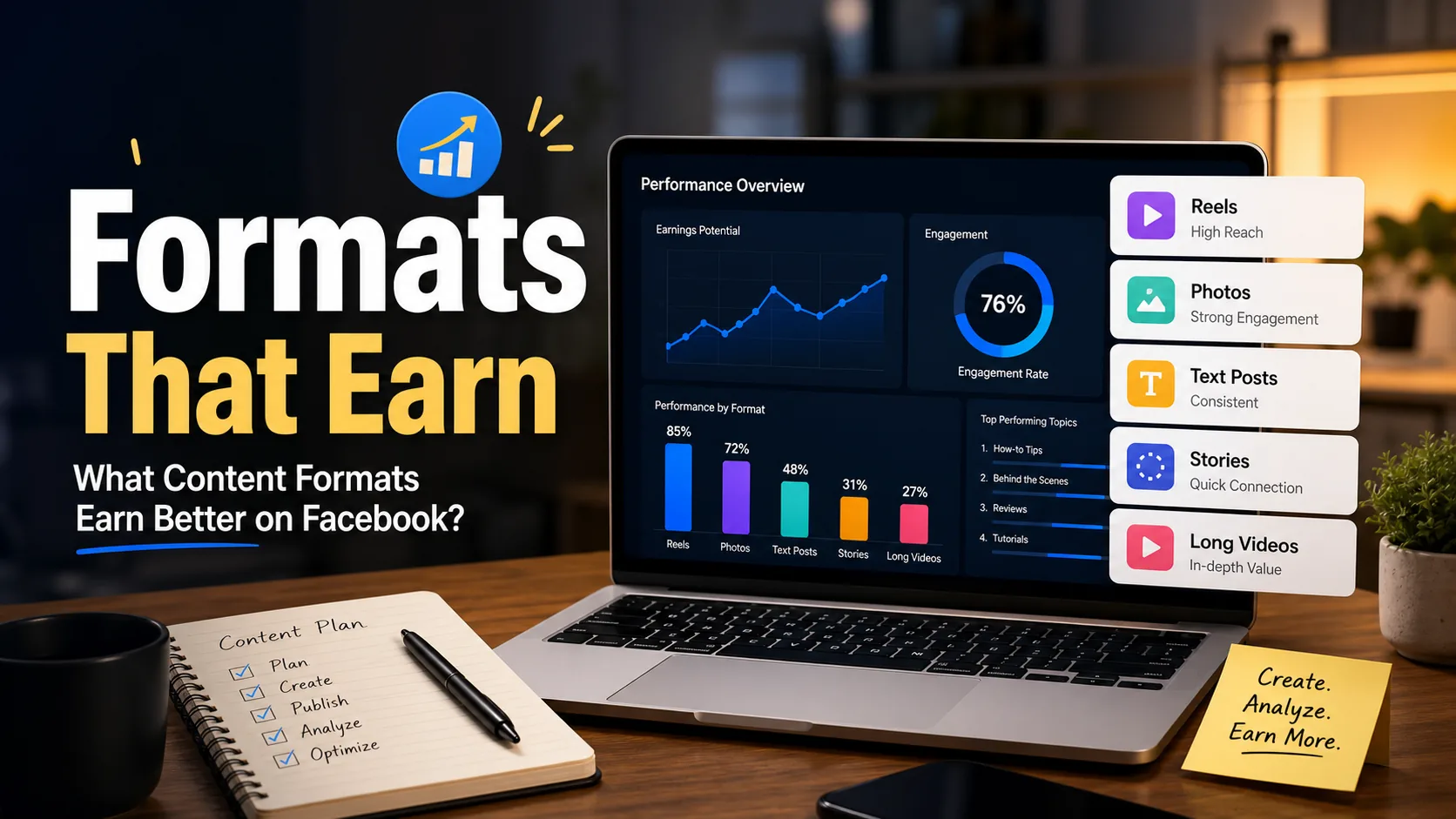
This guide compares Reels, photos, text posts, Stories, and long videos.
For most monetized Facebook creators, the strongest strategy is a format mix: Reels for reach, photos for quick engagement, text posts for discussions, long videos for deeper monetization potential, and Stories for retention.
Meta says Facebook Content Monetization can include several formats for eligible creators, but that does not mean every format earns equally. Always check Meta’s current rules and focus on audience quality, retention, originality, and consistency instead of chasing views only.
Why Format Choice Matters for Monetized Creators
If you want Facebook content monetization, you need more than random posting. Your formats decide how people discover you, how they interact with you, how long they stay with your content, and whether they come back tomorrow. Serious creators should not think only in single posts. They should think in format roles.
Each format does a different job:
- Reels introduce your page to new people.
- Photos create quick reactions and easy sharing.
- Text posts create comments and discussions.
- Stories keep warm followers close.
- Long videos build deeper attention and stronger monetization opportunities.
The mistake is trying to make one format do everything. If you only post Reels, you may get reach but weak community. If you only post photos, you may get reactions but limited depth. Good Facebook content strategy uses each format for the job it does best.
Facebook Content Formats Comparison Table
| Format | Engagement | Earning Potential | Effort | Best For | Avoid |
|---|---|---|---|---|---|
| Reels | High reach, quick reactions | Medium-high if retention is strong | Medium, 30 min-2 hrs | Growth, discovery, tips, demos | Copied clips, slow hooks, random trends |
| Photos | Strong reactions and shares | Medium support format | Low, 10-30 min | Food, quotes, before/after, visual tips | Recycled images, cluttered text, weak captions |
| Text Posts | Best for comments | Medium community value | Low, 10-25 min | Questions, opinions, stories, audience research | Lazy questions, fake controversy, walls of text |
| Stories | Lower reach, strong retention | Low direct, useful support | Low, 5-15 min | Polls, reminders, behind the scenes | Random reposts, overposting, no interaction |
| Long Videos | Lower reach, deeper watch time | High when original and well structured | High, 2-8 hrs | Tutorials, recipes, explainers, case studies | Slow intros, poor audio, stretched videos |
Use this table as a starting point. Different niches earn differently.
Do not choose a format only because it gets more views. Match each format to a job: reach, engagement, discussion, retention, or deeper monetization potential.
Reels: Best for Reach and Fast Growth
Reels are usually the fastest way to reach people who do not already follow your page. If your account is eligible for monetization, they can also contribute to earnings depending on performance and available monetization products. But do not confuse reach with business value.
Typical engagement level: High reach, quick reactions, uneven comments.
Monetization potential: Medium to high when they bring real watch time and repeat viewers. Viral one-off clips do not always build a valuable audience.
Difficulty level: Medium. Short does not mean easy. A strong Reel needs a hook, pacing, visual clarity, and a reason to watch until the end.
Time required: Around 30 minutes to 2 hours if you have a repeatable format. Longer if every Reel starts from zero.
Best use cases: Quick recipes, before/after transformations, “3 mistakes” tips, funny niche moments, short tutorials, original motivational clips, product demonstrations, and travel or lifestyle moments.
Practical example: A parenting page can turn “5 things toddlers do when they are tired” into a 25-second Reel, then reuse the idea as a discussion post.
Common mistakes: Copied videos, random trending sounds, slow hooks, Reels-only posting, and chasing views without checking follower quality.
Reels are excellent for discovery, but they need a content system behind them.
Photo Posts: Best for Fast Engagement
Photo posts are underrated because they feel simple. On many Facebook pages, they still drive strong reactions, shares, and comments. They are also one of the easiest formats to scale.
Typical engagement level: Medium to high, especially in visual niches.
Monetization potential: Medium. Photos can support Facebook content monetization by keeping the page active and increasing audience engagement.
Difficulty level: Low to medium. The hard part is not making an image. The hard part is making an image that feels original and worth reacting to.
Time required: Around 10 to 30 minutes with templates.
Best use cases: Food photos with short tips, before/after images, infographic-style posts, motivational cards with original commentary, travel shots, DIY progress photos, product-style visuals, and relevant niche memes.
Practical example: A healthy recipes page can post a meal photo with a useful caption: “High-protein lunch idea under 15 minutes.”
Common mistakes: Recycled images, low-quality screenshots, too much text, spammy engagement requests, and templates that never change.
Photo posts keep the audience reacting between heavier content pieces.
Text Posts: Best for Discussion and Community Signals
Text posts will not always give you the biggest reach, but they can create strong community signals. Comments reveal pain points, opinions, objections, stories, and future content ideas.
Typical engagement level: Medium comments, lower shareability unless the idea is very relatable.
Monetization potential: Medium. Text posts may not feel as exciting as video, but they help build the loyal audience that monetization depends on.
Difficulty level: Low. You do not need equipment, but you do need a real angle.
Time required: Around 10 to 25 minutes.
Best use cases: Opinion questions, mini-stories, audience polls, “which one would you choose?” prompts, creator notes, niche debates without fake drama, and personal lessons.
Practical example: A Facebook monetization page could ask: “What format has worked best for your page so far: Reels, photos, text posts, or videos?”
Common mistakes: Generic questions, fake controversy, self-centered posts, long blocks of text, and engagement bait.
Stories: Best for Retention and Daily Connection
Stories are not usually the format that brings the biggest new audience. Their job is different: they keep your existing audience warm and make your content feel more human.
Typical engagement level: Lower public engagement, stronger direct replies and retention.
Monetization potential: Low to medium directly, but useful as a support format.
Difficulty level: Low.
Time required: Around 5 to 15 minutes.
Best use cases: Behind the scenes, quick polls, reminders about new posts, daily previews, personal notes, repurposed clips, and question prompts.
Practical example: A DIY page can publish a tutorial, then use Stories to show tools, mistakes, and the finished result.
Common mistakes: Random content, overposting, no questions or polls, and treating Stories only as reposts.
Long Videos: Best for Deeper Monetization Potential
Long videos require more effort, but they can carry stronger monetization potential because they hold attention longer and allow deeper storytelling or education.
Typical engagement level: Lower reach than Reels for many pages, but stronger watch time when the topic is right.
Monetization potential: High when content is eligible, original, structured well, and keeps viewers watching.
Difficulty level: High.
Time required: Around 2 to 8 hours depending on scripting, filming, editing, and thumbnails.
Best use cases: Step-by-step tutorials, recipe videos, explainers, reviews, longer stories, educational series, original commentary, and case studies.
Practical example: A food creator can use Reels for discovery, then publish a full recipe video for viewers who want details.
Common mistakes: Slow intros, stretched videos, poor audio, weak structure, reused footage, and weak first 10 seconds.
Best Formats by Niche
Different niches have different format strengths. Food pages usually need Reels for quick recipes, photos for cravings, and long videos for full tutorials. Motivation pages often use Reels for emotional reach, photo quotes for shares, and text posts for discussion. DIY pages win with transformations, before/after photos, and deeper videos. Health, news-style, and education pages need more care: use clear sources, avoid misleading claims, and make sure long videos add real explanation. Entertainment pages can grow fast with Reels and photos, but originality matters. Reposting other creators without transformation can hurt trust and monetization eligibility.
The lesson is simple: do not copy another niche’s format strategy without testing it on your own audience.
How Successful Facebook Creators Mix Multiple Formats
Successful creators rarely depend on one format. They build a format stack.
- Reels for reach
- Photos for engagement
- Text posts for discussions
- Long videos for monetization depth
- Stories for retention
Think of it like a page ecosystem. A Reel gets discovered by new people. A photo gets shared by existing followers. A text post starts a conversation. A long video gives serious followers something deeper. Stories keep people connected between public posts.
Here is a simple example for a monetized food page:
- Monday Reel: “15-minute chicken bowl”
- Monday photo: Finished dish with ingredients list
- Tuesday text post: “What is your easiest high-protein lunch?”
- Wednesday long video: Full recipe tutorial
- Thursday Story: Poll asking followers which sauce they prefer
- Friday Reel: Leftover meal idea
- Saturday photo: Weekly grocery basket
- Sunday text post: Meal prep discussion
One idea becomes multiple formats, and each format has a different job.
A Practical Weekly Content Plan
Here is a realistic weekly plan for a monetized Facebook page.
Monday
- 1 Reel for reach
- 1 photo post for reactions
Tuesday
- 1 text discussion post
- 2 to 3 Stories showing behind the scenes or a quick poll
Wednesday
- 1 long video or deeper tutorial
- 1 Story pushing viewers back to the video
Thursday
- 1 Reel based on a proven hook
- 1 photo post that summarizes the same idea visually
Friday
- 1 text post asking for audience opinions or examples
- 1 Story question box or poll
Saturday
- 1 Reel or short video with a strong emotional or useful angle
- 1 photo post if your niche is visual
Sunday
- Review analytics
- Save top comments as future content ideas
- Analyze 5 competitor pages
- Plan next week’s formats
If you only have time for one post per day, try 3 Reels, 2 photo posts, 1 text post, and 1 longer video each week.
How to Discover Which Formats Work in Your Niche
The fastest way to improve is not guessing. It is studying what already works in your niche without copying it.
Every week, choose 5 to 10 similar pages. Review their strongest posts from the last 7 to 30 days. Do not only count views. Look at:
- Format type
- Hook
- Topic
- Comments
- Shares
- Length
- Visual style
- Audience emotion
- Repeat patterns
This is where a Facebook page analyzer becomes useful.
Instead of manually opening pages and saving screenshots, Contai helps creators analyze Facebook pages, compare competitors, filter posts by engagement signals, and find top-performing formats faster.
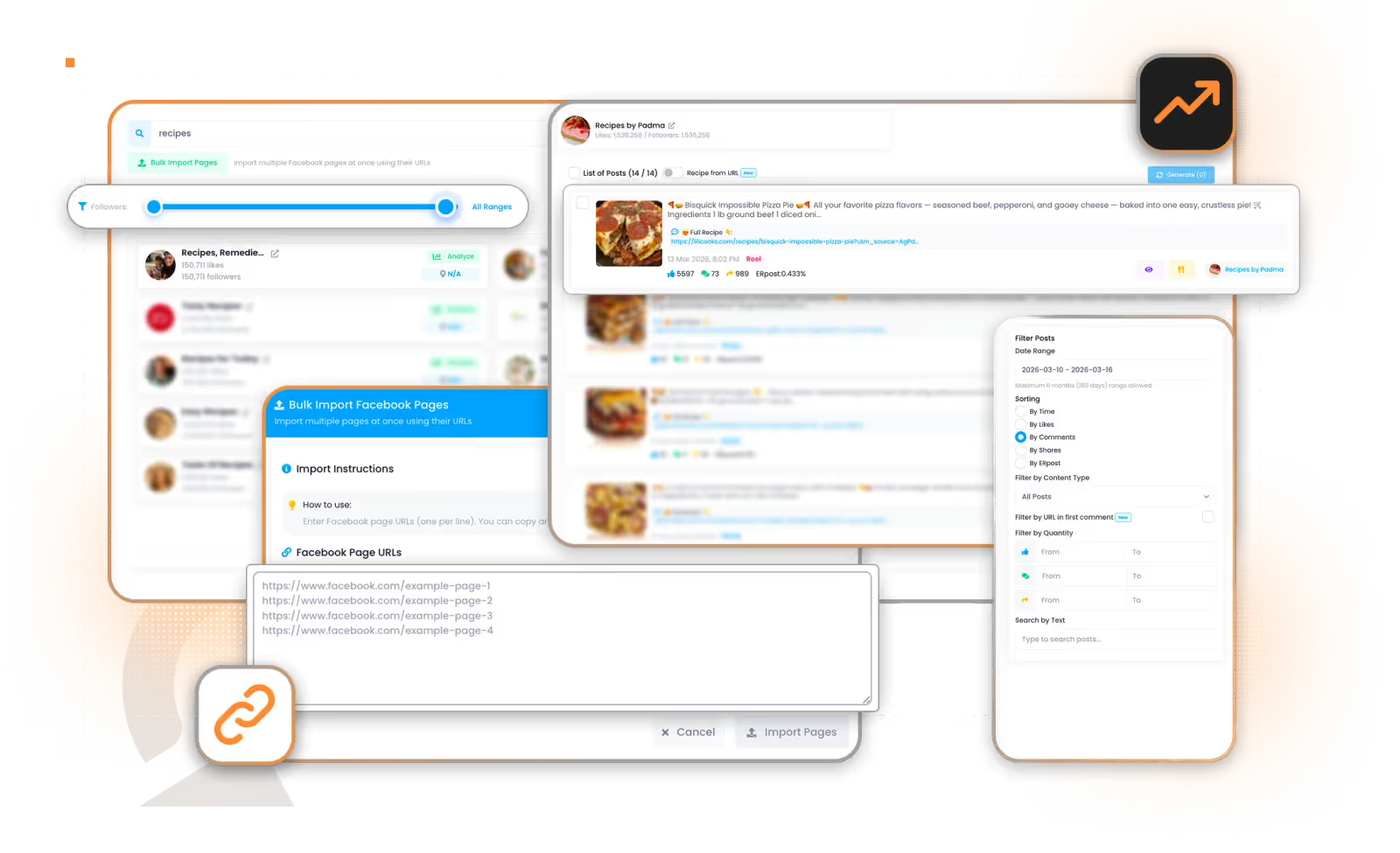
Contai’s Facebook Page Analyzer helps creators study top-performing Facebook posts, formats, and engagement patterns before creating new content.
For example, you might discover that Reels get the highest reach, photos get the most shares, long videos work only with a clear opening result, or text posts perform best when they ask a specific opinion.
That kind of research can help boost Facebook page earnings over time because you are understanding patterns, not copying posts.
How to Turn Winning Formats Into a Content System
Finding a winning format is good. Turning it into a repeatable system is better. Use this workflow:
- Research 5 to 10 competitor or inspiration pages.
- Save the top posts by format.
- Identify the pattern: hook, topic, structure, emotion, and audience response.
- Create your own original angle.
- Generate 5 to 10 post variations.
- Choose the best formats for the week.
- Publish consistently.
- Review performance every Sunday.
This is where Facebook content automation should help: not fake engagement or auto-commenting, but removing repetitive work so you can spend more time on creative judgment.
With Contai, creators can connect more of this workflow:
- Use the Facebook Analyzer to research pages and formats.
- Filter top posts by likes, comments, shares, type, date, or engagement rate.
- Turn proven patterns into original content ideas.
- Use an AI social media post generator workflow to create caption variations.
- Plan visuals and publishing.
- Stay consistent without starting from zero every day.
Contai can help you move faster, but your judgment decides what fits.
Common Mistakes That Hurt Monetization
The creators who struggle usually make one of these mistakes.
They chase only views. Views matter, but low-quality reach does not always bring loyal followers or strong monetization.
They copy viral posts. Studying a format is smart. Reposting or lightly changing someone else’s work is risky and weakens your brand.
They ignore long videos. Not every niche needs daily long videos, but deeper content can create stronger attention and earning potential.
They never post discussion content. Comments show you what people care about. If you never ask, you keep guessing.
They use AI without editing. AI can help you move faster, but robotic posts damage trust. Rewrite with your own examples, tone, and point of view.
They post too many formats without a system. A mixed strategy is powerful only when each format has a role.
They forget policy quality. Always check Meta’s current monetization rules and eligibility inside your Professional Dashboard or Meta Business Suite, and review the Content Monetization Terms. Monetization depends on your country, account status, content quality, eligibility, and platform rules.
Final Takeaway
If you want to boost content monetization earnings, do not ask which format is “best” in a generic way.
Ask which format does which job.
Use Reels to reach new people. Use photos to create fast engagement. Use text posts to build discussion. Use Stories to keep your audience warm. Use long videos when the idea deserves depth and stronger watch time.
Then study your niche, track what works, and turn your best formats into a weekly system.
Automation will not make weak content strong. But the right workflow can help you research smarter, create original posts faster, and publish with more consistency. If you want to connect Facebook competitor analysis, viral format research, AI content creation, and publishing in one place, Contai is worth testing as part of your creator workflow.
Frequently Asked Questions
What content format earns the most on Facebook?
There is no single format that earns the most for every creator. Long videos often have strong monetization potential because they can hold deeper attention, while Reels can drive fast reach and discovery. Photos and text posts can also support Facebook Content Monetization for eligible creators and help build engagement. The best strategy is usually a mix of formats.
Are Reels better than long videos for Facebook monetization?
Reels are better for reach and page growth, while long videos are often better for deeper attention and stronger audience trust. A smart creator uses Reels to bring people in and long videos to serve the audience that wants more detail.
Can photo and text posts earn money on Facebook?
Meta has said Facebook Content Monetization is designed to help eligible creators earn from more formats, including Reels, longer videos, photo posts, and text posts. Eligibility, availability, and payouts depend on Meta's current rules, your account, your country, and content performance.
Which Facebook format is easiest to scale consistently?
Photo posts, text posts, and Stories are usually easiest to scale because they require less production time. Reels can also scale well if you use repeatable templates. Long videos are harder to scale, but they can be more valuable when used for your strongest ideas.
How do I know which content formats work in my niche?
Analyze competitor pages and top-performing posts in your niche. Look at format type, hook, topic, comments, shares, watch time signals, and repeated patterns. Tools like Contai's Facebook Page Analyzer can speed up this research by helping you compare pages and filter posts by performance.
What tools help with Facebook content monetization?
Useful Facebook content monetization tools include competitor analysis tools, Facebook page analyzers, AI social media post generators, scheduling tools, and analytics dashboards. Contai is useful because it connects research, content generation, and publishing into one creator-focused workflow.
Keep learning
Related articles
Get Smarter Facebook Content Automation Tips
Weekly guides about Facebook automation, AI content workflows, content monetization, and page growth systems.
Join the Newsletter