
How to Build a Facebook Page Content System From Scratch
A practical system for turning Facebook page content from daily guessing into a repeatable workflow.
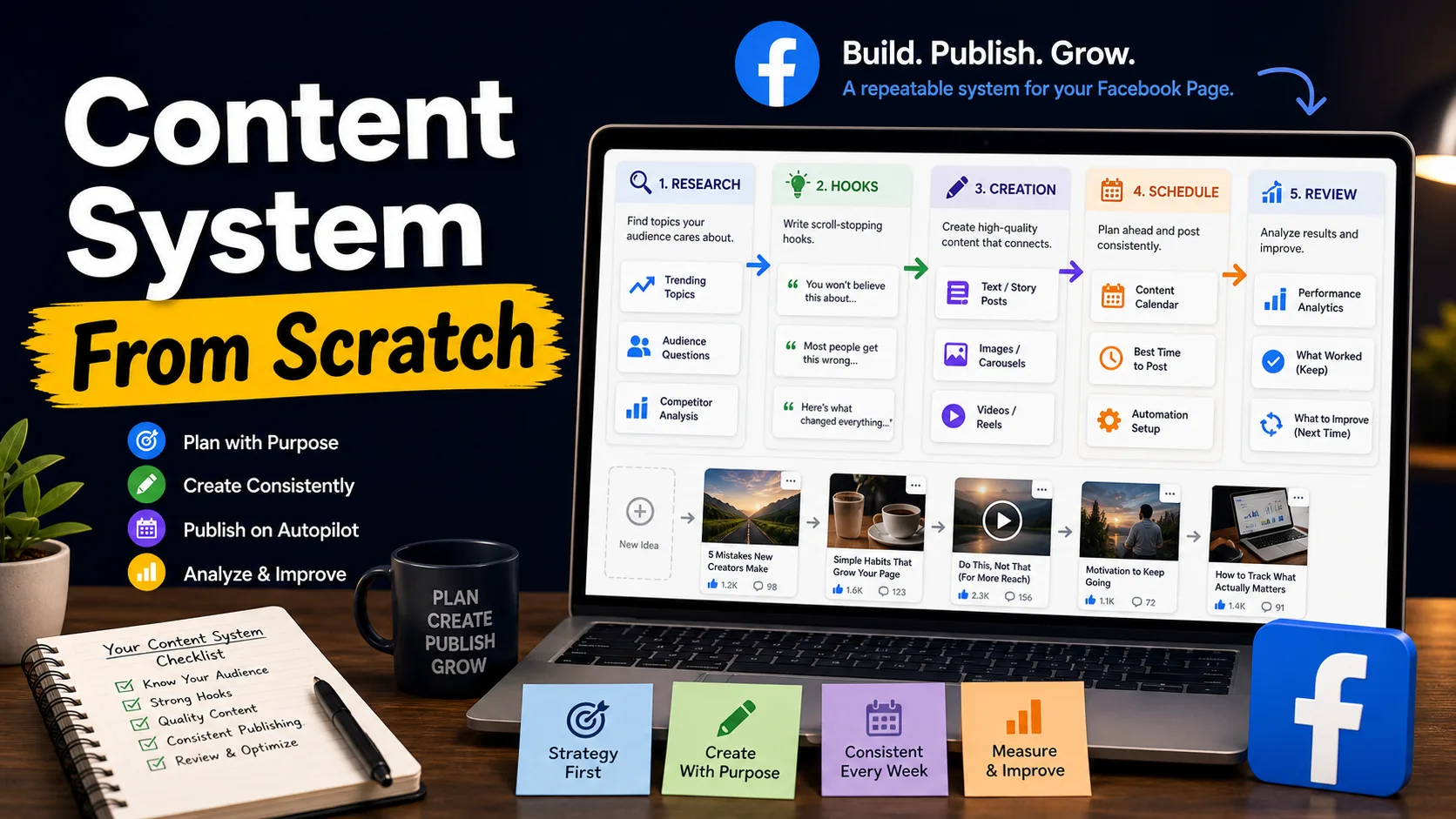
A Facebook page does not grow because the owner feels inspired every day. It grows when the owner builds a system that keeps producing clear, original, audience-fit content.
If every post starts from zero, the page will eventually become inconsistent. A content system gives you a repeatable path from research to post ideas to publishing to review.
The R-C-P-S-R Content System
This framework keeps the workflow simple enough to repeat every week.
Find topics, hooks, and audience questions.
Turn patterns into original post angles.
Schedule posts with consistent timing.
Review comments, reach, saves, shares, and earnings signals.
Use results to improve the next batch.
What Most Creators Get Wrong
Most creators try to fix consistency with motivation. That never lasts. The better fix is a workflow that tells you exactly what to do on Monday, Tuesday, Wednesday, and Sunday.
Build the System in One Week
You do not need a complex setup. Start with a simple board, a weekly rhythm, and a review habit.
- Choose one page promise and one target audience.
- Create 4 content pillars that support that promise.
- Collect 30 researched content ideas from your niche.
- Write 10 reusable hook structures.
- Batch 14 posts at a time.
- Schedule posts into a weekly calendar.
- Review results every Sunday and update the idea bank.
System Health Metrics
Manual Page vs System Page
| Area | Manual Page | System Page |
|---|---|---|
| Research | Scroll when stuck | Research once per week |
| Writing | One post at a time | Batch hooks and angles |
| Publishing | Post when remembered | Schedule from a calendar |
| Review | Look at likes | Study format, topic, comments, saves, shares |
| Scaling | Burnout risk | Repeatable workflow |
Content System Board Columns
- Research saved.
- Angles to write.
- Drafts ready.
- Needs visual.
- Scheduled.
- Published.
- Review notes.
Mini Case Study
A motivation page posts randomly for months and gets inconsistent reach. After switching to four pillars, daily hook templates, and a Sunday review, the page stops guessing. Even before reach improves, the creator has a cleaner production workflow and better audience signal.
How to Use Tools Without Losing Originality
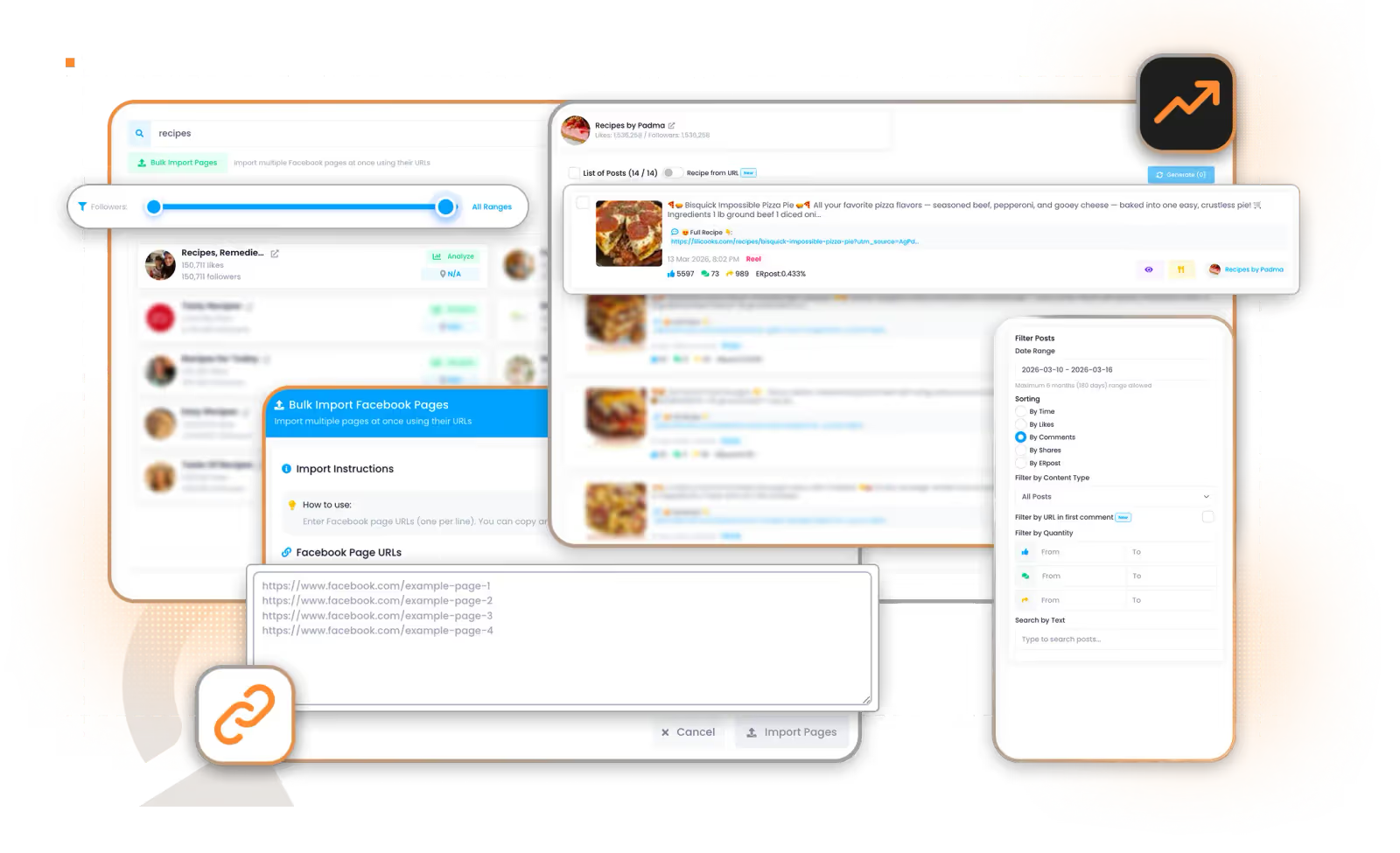
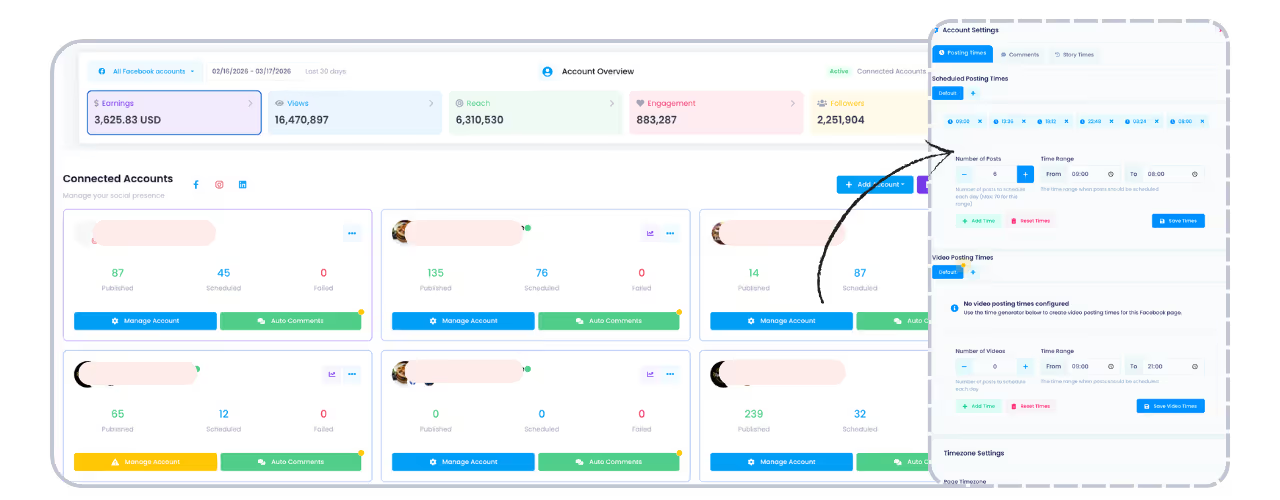
A serious Facebook content workflow uses tools to reduce repetitive work, not to remove creator judgment. For example, a creator can use a Facebook page analyzer to study what topics and formats are working, then use AI to draft original angles, then use a publishing workflow to schedule the best versions. That is very different from copying a viral post and pushing it everywhere.
Contai can support the system without becoming the strategy: use analysis to find content patterns, AI to create variations, and publishing tools to keep the calendar moving.
How This Looks in Real Niches
The same system should not look identical in every niche. A food page, a DIY page, a motivation page, and a finance page can all use research, hooks, content batching, and review, but the examples and audience promises must change. This is where many creators lose quality: they copy a structure from one niche and paste it into another niche without adapting the proof, emotion, or practical value.
| Niche | Smart Content Angle | Metric to Watch |
|---|---|---|
| Food | Cheap meals, family favorites, mistakes, substitutions, and “would you try this?” tests. | Saves, shares, and comments from people who actually cook. |
| Home and DIY | Before-after tests, repair vs replace decisions, cleaning comparisons, renter-friendly ideas. | Watch time, saves, shares, and specific questions in comments. |
| Motivation | Short lessons, relatable mistakes, discipline systems, and personal reflection prompts. | Comment quality and repeat engagement from the same audience segment. |
| Finance | Budget habits, normal-family examples, bill breakdowns, and safe money lessons without hype. | Saves, trust signals, and low-drama discussion quality. |
The 30-Day Tracking Dashboard
If you want a Facebook page to grow like a serious media asset, track the same numbers every week. Do not only look at one viral spike. A random spike can make a creator overconfident. A dashboard shows whether the page is becoming healthier.
Dashboard Metrics to Review Weekly
Quality Control Before Publishing
This is the boring part that saves pages. Before a post goes live, run a fast quality check. It takes a few minutes, but it prevents the kind of random, copied, or low-value content that makes a page weaker over time.
- Does the first line make the value clear without clickbait?
- Can a reader understand why this belongs on your page?
- Is the post original enough in wording, example, media, and angle?
- Does the format match the idea, or are you forcing every idea into the same layout?
- Is the question connected to the content instead of baiting meaningless comments?
- Would this post still make sense if it received no viral spike?
- What one metric will you check after it goes live?
A Simple Page Audit Example
Imagine a small page posting five times per day but getting weak follower growth. The owner thinks the problem is volume, so they want to post more. After a quick audit, the real issue is different: two posts are off-niche, one post is copied in structure, one post has a weak hook, and only one post teaches something useful. The fix is not more volume. The fix is a cleaner system.
- Remove off-niche posts from the next 7 days.
- Rewrite weak hooks into specific promises.
- Turn copied inspiration into original examples or tests.
- Keep the strongest format and create three new angles from it.
- Review saves, shares, comments, and follower fit before increasing volume.
When to Scale the Posting Volume
Posting more only helps when the system is already producing useful content. If the page is random, posting more makes the randomness louder. If the page has a clear promise, strong hooks, original examples, and weekly review, then increasing volume can give the system more chances to learn.
| Signal | Do Not Scale Yet | Ready to Scale |
|---|---|---|
| Niche | The page changes topics every few days. | The page has one clear promise. |
| Ideas | Posts are created from panic or copying. | Ideas come from research and audience questions. |
| Quality | AI drafts or viral patterns are published raw. | Every post passes an originality check. |
| Review | The creator only checks likes. | The creator tracks comments, saves, shares, and follower fit. |
How This Supports a 5x/Day Posting System
Posting five times per day only works when the page has enough structure to protect quality. The mistake is treating 5x/day like a volume hack. It should be a distribution system: one useful post, one discussion post, one visual post, one story or example, and one test. Each slot has a job. If every slot is random, the page teaches Facebook random signals.
A practical 5x/day rhythm might look like this: morning checklist, late-morning example, afternoon question, evening visual, and night recap or mini story. You can prepare these in batches, but each post still needs its own hook, angle, and reason to exist. This is where a planning tool, AI drafting, and scheduled publishing can save time without turning the page into a content machine.
Mistakes to Avoid
- Building a complicated system nobody will use.
- Creating content pillars that do not match the audience.
- Skipping originality checks.
- Reviewing only views.
- Never cleaning old weak ideas from the board.
What I Would Do Today
I would build the simplest possible board and run it for 14 days. If the workflow survives two weeks, improve it. If it feels heavy, simplify it before adding more tools.
Related Reading
- Facebook Automation for Content Creators
- How to Find Viral Facebook Posts in Your Niche
- How to Turn Viral Facebook Posts Into Original Content
- The Weekly Facebook Content System for Monetized Pages
- 50 Facebook Post Hooks for More Engagement
- Facebook Content Monetization Strategy
FAQ
What is a Facebook page content system?
It is a repeatable workflow for researching, creating, scheduling, and reviewing posts.
Do small pages need a content system?
Yes. Small pages need it even more because they cannot waste energy on random posting.
How many content pillars should I use?
Start with 3 to 5 pillars. More than that can make the page feel scattered.
Can automation help with a content system?
Yes, when it supports research, drafting, scheduling, and review without replacing originality.
How often should I review the system?
Review weekly. A system that never learns becomes a content factory, not a growth engine.
Final Takeaway
A content system is not about removing creativity. It is about protecting creativity from daily chaos.
Keep learning
Related articles



Get Smarter Facebook Content Automation Tips
Weekly guides about Facebook automation, AI content workflows, content monetization, and page growth systems.
Join the Newsletter