
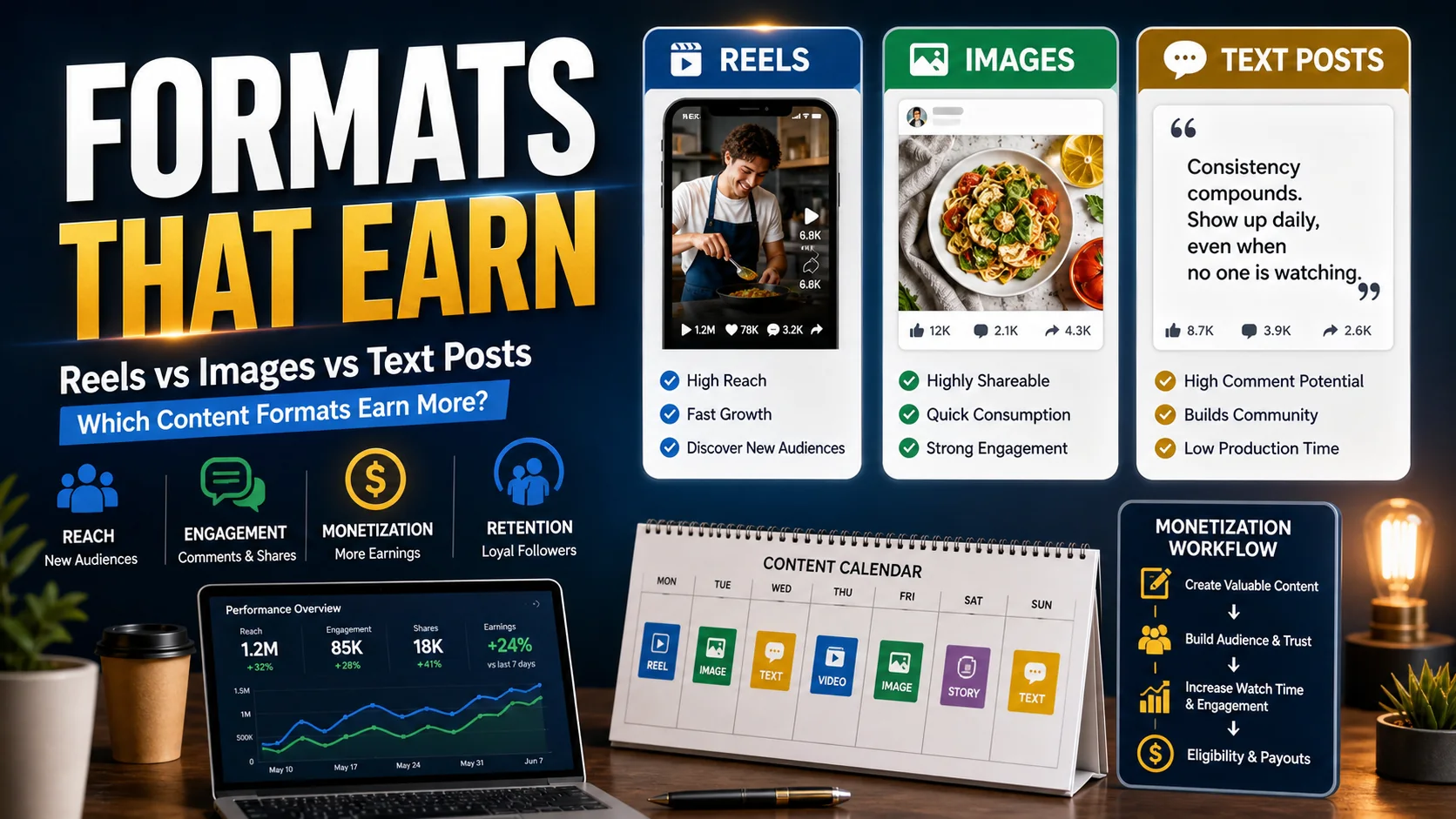
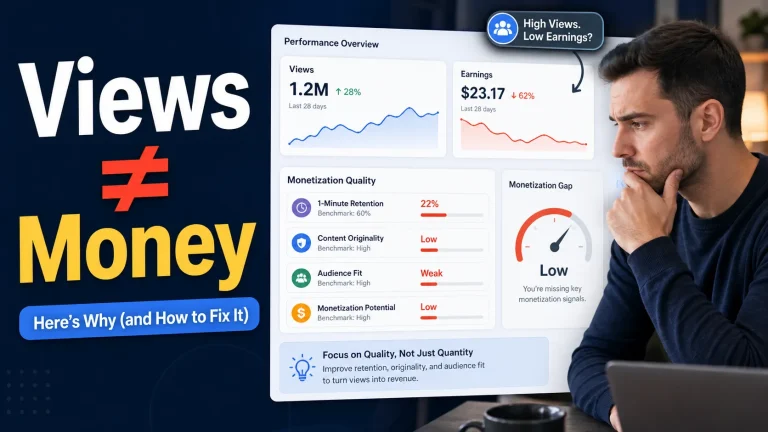
A Reel can get one million views and still be less valuable than a smaller post that brings returning viewers, real comments, website clicks, or steady monetization signals. That is the part many Facebook page owners learn the hard way.
If you are trying to choose between Reels, images, and text posts, the real question is not only “what gets the most views?” The better question is: which Facebook content monetization formats help your page reach new people, keep the right audience, and turn attention into income over time?
I have seen creators waste months chasing the format that looks biggest in public metrics. Reels show views. Image posts show shares. Text posts show comment threads. Longer videos show watch time. Stories show loyal followers. Link posts can support a business outside Facebook. None of these formats does the same job.
The Difference Between Reach, Engagement, and Revenue
Before comparing formats, you need to separate three things that creators often mix together: reach, engagement, and revenue.
Reach is how many people see your content. This is where Reels often look powerful because short-form video can travel outside your existing follower base.
Engagement is what people do after seeing the post: comments, reactions, shares, saves, follows, profile visits, clicks, and repeat viewing. Engagement quality matters. A hundred thoughtful comments from your exact audience can be worth more than ten thousand passive views from people who never come back.
Revenue is the money created directly or indirectly from that attention. For a monetized Facebook page, this may include eligible Facebook Content Monetization earnings, but it can also include website ad revenue, affiliate clicks, email subscribers, product sales, sponsorship interest, or traffic to your own offers.
Facebook Reels: Best for Discovery and Fast Growth
Reels are usually the strongest format for discovery. If your goal is to introduce your page to new people, test hooks quickly, and reach beyond your followers, Reels deserve a serious place in your calendar.
The best Reels are built around a fast first second. You need movement, curiosity, visual payoff, or a clear promise. A food page might use “3-ingredient dinner in 20 seconds.” A DIY page might show the finished result first, then the process. A motivation page might use a strong one-line idea with a simple visual. A travel page might open with the most surprising shot, not the airport clip.
For creators researching Facebook Reels monetization, the upside is obvious: Reels can create large top-of-funnel attention. The weakness is that viral reach can be shallow. If the Reel is funny but unrelated to your niche, you may get views from people who never engage again. If the hook is misleading, you may get a short spike and weaker trust.
The common mistake is treating Reels like a slot machine. Creators post random short videos, hope one hits, then wonder why page earnings do not improve. Reels work better when every video points back to a clear niche identity: the type of creator you are, the audience you serve, and the reason people should follow.
Image Posts: Best for Shares, Fast Consumption, and Simple Scaling
Image posts are often easier to scale than Reels because production is lighter. A good image can be understood in two seconds, saved, shared, or discussed. That makes images useful for creators who need consistency but do not have time to film every day.
For Facebook image post monetization, the value usually comes from reach, shareability, and audience habit. A recipe card, before-and-after result, educational graphic, quote with real context, news-style summary, or relatable visual can bring consistent engagement even when it does not look as flashy as a viral Reel.
Images work especially well in food, home decor, parenting, health tips, quotes, education, local news, history, entertainment, and lifestyle niches. The best image posts usually have one clear idea. They are not overloaded with tiny text, random design elements, or generic AI visuals that feel disconnected from the caption.
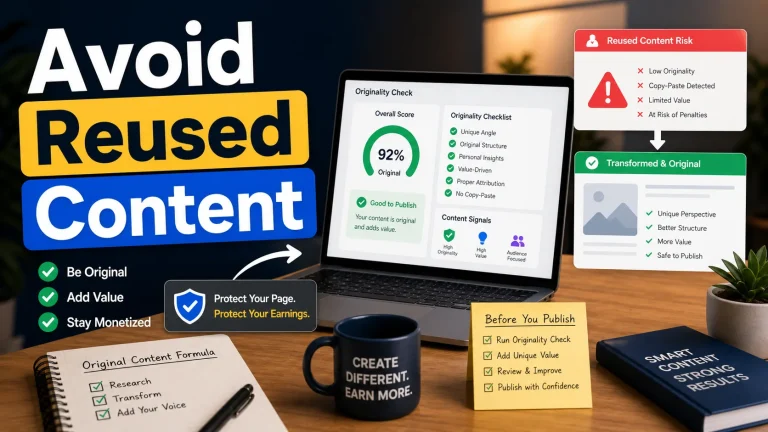
The danger is originality. Reposting a viral image with tiny changes is not a strategy. It is a risk. Meta’s 2026 creator update emphasized original content and reducing distribution for duplicative, low-value reposting. If you use AI images or templates, edit them with your own angle, caption, examples, and page identity.
Text Posts: Best for Discussion and Audience Understanding
Text posts are underrated because they do not look as impressive in a content calendar. No camera. No design. No big production. But for many pages, text posts create the clearest audience signals.
A good text post can make people answer, argue, remember, tell a story, or share an opinion. That is useful for creators who want to build community instead of only chasing one-time reach. For Facebook text post monetization, the value is often indirect: more comment depth, stronger relationship with followers, better topic research, and more repeat engagement.
Examples: a parenting page asks, “What is one rule your parents had that you still follow today?” A food page asks, “Which ingredient ruins a perfect sandwich?” A finance education page shares a short personal lesson and asks readers what they would do differently. A motivation page posts one sharp observation, not a generic quote everybody has seen before.
Longer Videos: Best for Trust, Watch Time, and Expert Niches
Longer videos do not fit every page, but when they work, they can create deeper attention than short posts. Tutorials, explanations, interviews, demonstrations, product breakdowns, storytelling, and educational series can keep people watching because the format gives you room to build context.
This is where a page can move from “people saw me once” to “people trust me.” A cooking creator can publish a full recipe walkthrough. A home improvement page can show a complete repair. A personal finance page can explain a mistake and the lesson behind it. A tech page can compare tools with real examples.
The difficulty is structure. Long videos punish slow openings. You need a clear promise, tight editing, useful pacing, and a reason to stay until the end. If you cannot produce longer videos consistently, use them weekly or biweekly while Reels, images, and text posts keep the page active between bigger pieces.
Stories: Best for Retention, Not Discovery
Stories are usually not the best format for reaching new audiences. Their strength is staying present with people who already know you. That matters more than many creators think.
Use Stories for polls, post reminders, quick updates, behind-the-scenes moments, question boxes, traffic reminders, and audience check-ins. If you publish a strong Reel or article, a Story can help existing followers see it. If you run a niche page, Stories can make the page feel alive between feed posts.
Stories are not always the highest earning format directly, but they help with retention. And retention is one of the missing pieces when creators ask what content formats earn more on Facebook. A page full of strangers is fragile. A page with returning followers is an asset.
Link Posts: Best for Website, Email, and Off-Facebook Revenue
Link posts are different because their goal is often not direct Facebook engagement. Their job is to move people toward a website, newsletter, product page, affiliate article, tool review, or resource. For publishers and bloggers, this can be a serious monetization path.
Website traffic can create display ad revenue, affiliate income, email subscribers, returning readers, Google Discover opportunities, and stronger business assets outside social media. That is why creators who only measure Facebook views sometimes miss the bigger picture.
Do not rely on tricks. Some creators test putting a link in the first comment, while others publish direct links with strong context. There is no universal rule that works for every page. Test both carefully and measure clicks, time on page, comments, and earnings, not only reach.
Facebook Content Monetization Formats Compared
Here is a practical comparison. Do not read this as exact payout advice. Earnings vary by niche, country, audience quality, eligibility, originality, advertiser demand, content quality, and Meta’s current program rules.
| Format | Best Job | Monetization Role | Difficulty | Best Niches | Watch Out |
|---|---|---|---|---|---|
| Reels | Discovery and fast reach | Top-of-funnel growth and video monetization potential | Medium to high | Food, DIY, pets, travel, fitness, education | High views without loyal followers |
| Images | Shares and quick reactions | Consistent engagement and scalable daily posting | Low to medium | Recipes, quotes, news, history, lifestyle, parenting | Generic visuals and originality risks |
| Text Posts | Comments and discussion | Audience research, repeat engagement, community depth | Low | Opinions, personal stories, parenting, education, motivation | Engagement bait and shallow questions |
| Long Videos | Watch time and trust | Deeper viewing behavior and expertise building | High | Tutorials, interviews, education, reviews, demonstrations | Slow intros and weak structure |
| Stories | Follower retention | Staying visible to existing followers | Low | Personal brands, lifestyle, creators, communities | Expecting Stories to create discovery |
| Links | Traffic and owned assets | Website ads, affiliates, email, offers | Medium | Publishers, bloggers, tools, education, news | Measuring only reach instead of clicks and revenue |
Recommended Format Mix by Goal
The best Facebook content format depends on the job you need the post to perform.
If Your Goal Is Fast Discovery
Use more Reels, supported by image posts that make your niche identity clear. A good split might be four Reels, two images, and one text discussion per week. This works well when your page needs new audience growth.
If Your Goal Is Community Building
Use text posts, images, and Stories. Ask better questions. Share stronger opinions. Use image posts to make ideas easy to react to, then use Stories to stay close to regular followers.
If Your Goal Is Expert Positioning
Use longer videos, educational images, and text explanations. Reels can still bring discovery, but the trust is built through deeper content. This is useful for health, finance, education, tech, marketing, tools, and coaching-style pages.
If Your Goal Is Publisher Revenue
Use images, text posts, Reels, and strategic website links. Your page should not only collect reactions. It should send qualified readers to useful articles and resources. For example, this site uses Facebook education content to support deeper guides like Facebook content monetization strategy and Facebook content monetization tools.
How to Find the Best Format in Your Own Niche
The worst way to choose a format is by copying what a random creator said worked for them. Their audience, niche, language, production skill, and monetization setup may be completely different from yours.
Use a 30-day test instead:
- Select four formats: Reels, images, text posts, and either longer videos or links.
- Publish each format consistently for four weeks.
- Keep topics reasonably comparable so the test is not random.
- Track reach, shares, comments, engagement rate, follows, clicks, and earnings where available.
- Separate public vanity metrics from business value.
- Identify the two formats that create the strongest audience and monetization signals.
- Increase those formats in your calendar for the next month.
- Repeat the test with new topics, hooks, and posting times.
If you want a deeper workflow for choosing formats and building a page system, read the related guide on what content formats earn better on Facebook. This article is more focused on the Reels vs images vs text decision, while that one covers the broader monetized creator mix.
How Contai Helps Analyze Content Formats
You can test your own page, but you should also study what is already working in your niche. Not to copy. To understand patterns before you spend hours creating posts.
With Contai’s Facebook page analyzer, creators can compare competing pages, filter by post formats, sort by likes, comments, shares, or engagement rate, and see which formats repeatedly perform in a niche.
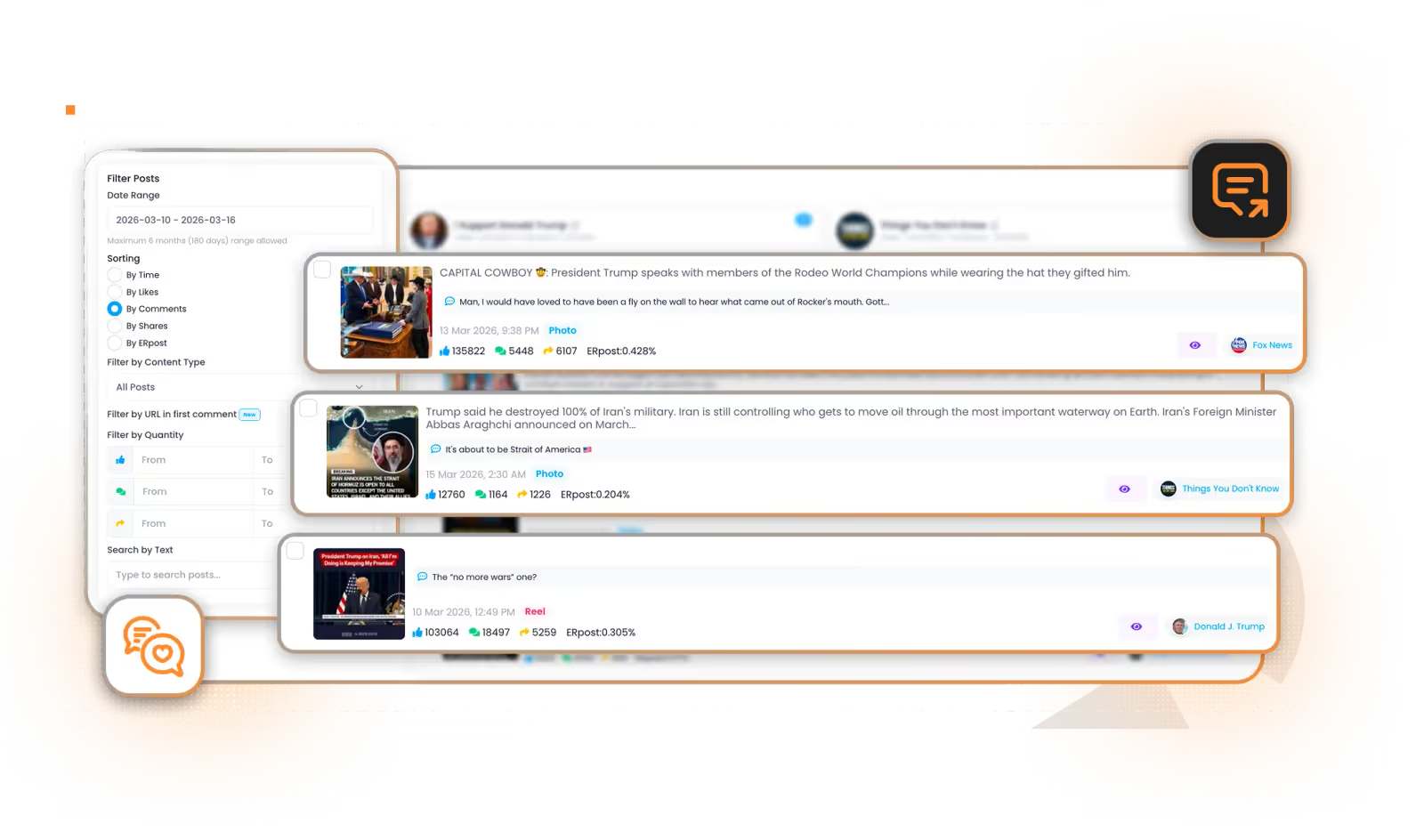
This is also where Facebook automation becomes useful in the safe sense: research, planning, content creation, and scheduling. Not bots. Not fake engagement. Not mass posting low-quality content.
How to Turn Winning Formats Into a Content System
Once you know which formats work, build templates around them. Most creators lose consistency because every post starts from zero.
For example, a food page might create these templates: one short Reel showing the final dish first, one image recipe card, one text post asking a food preference question, one longer weekend recipe video, and two Stories reminding followers about the best post of the week.
A finance education page might use a different system: one Reel explaining a mistake, one image checklist, one text discussion, one longer explainer video, and one link post to a detailed article. A local news-style page might use images for fast summaries, text for discussion, links for full stories, and Reels only when the topic has a visual angle.
This is how you boost Facebook page earnings without simply posting more. You post with clearer jobs: reach, engagement, trust, retention, and revenue.
A Sample Seven-Day Format Mix
Use this as a starting point, not a rule. Adjust based on your niche, production capacity, and analytics.
Monday: 1 Reel built around a strong visual hook.
Tuesday: 1 image post with a useful caption.
Wednesday: 1 text discussion that asks for real opinions.
Thursday: 1 Reel based on a proven topic pattern.
Friday: 1 educational image or carousel-style post.
Saturday: 1 longer video, tutorial, or deeper explanation.
Sunday: Stories, an audience question, and a weekly review of what worked.
Common Mistakes That Lower Format Performance
Choosing formats only by view count. Views are useful, but they do not tell the full monetization story. Track returning viewers, comments, shares, clicks, and earnings too.
Copying viral videos. Competitor research should help you understand patterns, not steal posts. Meta’s creator updates continue to emphasize original content and reduce the value of duplicative posting.
Publishing the same format every day. A page with only Reels may grow fast but fail to build discussion. A page with only text posts may keep loyal followers but struggle with discovery. Mix formats by job.
Ignoring production capacity. If you cannot make seven quality Reels per week, do not build a plan that depends on seven Reels. A realistic system beats an impressive calendar you abandon after ten days.
Using misleading hooks. Clickbait might create a spike, but it can damage trust and retention. Monetized creators need audience quality, not only attention.
Failing to measure earnings by format. If your page is monetized, review format-level performance. You may discover that a smaller long video or website link creates more business value than a Reel with ten times the views.
Final Takeaway
The format that earns more is not always the format that gets the most public attention. Reels are powerful for discovery. Images are practical for shares and consistency. Text posts are excellent for discussion. Longer videos build trust. Stories keep followers warm. Links can build assets outside Facebook.
If you want a stronger format strategy, start with research. Study your niche, test your own page for 30 days, and use tools like Contai’s Facebook Page Analyzer to discover what works before creating your next content calendar.
Frequently Asked Questions
Do Facebook Reels earn more than image posts?
Not always. Reels often create more discovery and reach, but image posts can drive strong shares, repeat engagement, and audience habit. The better format depends on your niche, originality, audience quality, eligibility, and whether you measure only views or real monetization value.
Can text posts make money through Facebook Content Monetization?
Text posts can support monetization indirectly by creating discussion, repeat engagement, and better audience signals. Under Facebook Content Monetization, format eligibility and payouts depend on Meta's current rules, so creators should always check official Meta documentation.
Which Facebook content format gets the most reach?
Reels usually have the strongest reach potential because they can be distributed to people who do not already follow the page. But reach alone does not guarantee loyalty, clicks, or earnings, so creators should compare reach with comments, shares, follows, clicks, and revenue.
Should creators post several different formats?
Yes. A healthy monetized page usually uses multiple formats: Reels for discovery, images for shares, text posts for discussion, longer videos for trust, Stories for retention, and links for website or email growth.
How can I analyze competitors by post format?
Choose several competitor pages in your niche, review their top posts by format, and compare engagement patterns over time. Tools like Contai's Facebook Page Analyzer can make this faster by helping creators filter and compare Reels, photos, videos, and links.
Does Contai compare Reels, photos, videos, and links?
Contai's Facebook Page Analyzer is designed to help creators study competing pages, filter content, and identify performance patterns across formats so they can create a smarter content calendar instead of guessing.
Keep learning
Related articles
Get Smarter Facebook Content Automation Tips
Weekly guides about Facebook automation, AI content workflows, content monetization, and page growth systems.
Join the Newsletter